
Rupert Lowe’s Westminster Speech Reignites Britain’s Fierce Debate Over Asylum, Deportations, and Public Safety
Rupert Lowe has once again placed himself at the centre of Britain’s immigration debate after delivering a forceful Westminster speech calling for a much tougher approach to illegal migration, asylum policy, detention, deportation, and public safety.
The speech has spread quickly online because it uses language that is simple, direct, and deliberately confrontational: abolish the current asylum system, detain illegal entrants, deport those with no right to remain, and restore what supporters describe as control over Britain’s borders.
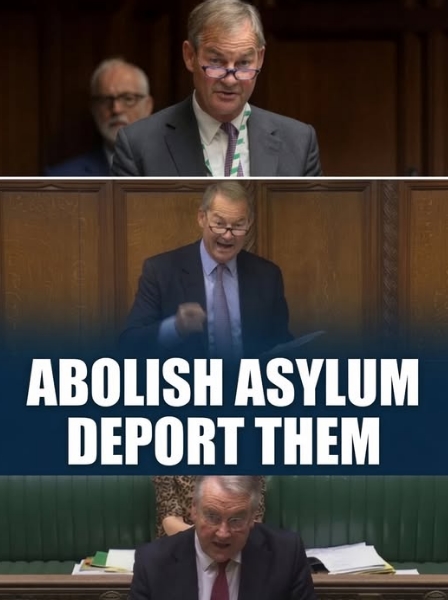
For Lowe’s supporters, the message is long overdue. They argue that the asylum system has become too slow, too expensive, too open to abuse, and too disconnected from the concerns of ordinary citizens. For critics, the speech is part of an increasingly hardline politics that risks turning vulnerable people into targets and reducing a complex legal and humanitarian issue to slogans.
The controversy reflects a wider national question: how far should Britain go to regain control of its borders – and what must it preserve in the process?
What Lowe Has Been Saying
Recent parliamentary and campaign material linked to Lowe and Restore Britain has focused heavily on mass deportations, offshore detention, withdrawal from key human-rights frameworks, and abolition of the current asylum system. A Westminster Hall debate on an e-petition calling for offshore detention and deportation of illegal immigrants was published by parliamentary-tracking sources in July 2026, with Lowe thanking more than 720,000 signatories and arguing that mass deportation had moved from the “fringe” to the political mainstream.
Restore Britain’s own policy material says it wants to abolish Britain’s asylum system “in its current form” and pursue mass deportations of illegal migrants. Its published plan also proposes repealing the Equality Act and Human Rights Act, withdrawing from the European Convention on Human Rights, and passing a “Great Clarification Act” to reassert parliamentary sovereignty over the courts.
Those proposals are among the most radical migration policies currently being advanced in British politics. They go well beyond faster asylum processing or tougher border enforcement. They would represent a major break with the legal architecture Britain has operated under for decades.
Why the Speech Resonates With Supporters
Lowe’s message resonates because immigration has become one of the strongest symbols of public distrust in government. Many voters see small boat crossings, asylum hotels, deportation delays, foreign-national offending, and court challenges, and conclude that the state no longer controls its own borders.
Supporters argue that Britain cannot keep funding accommodation, legal processes, benefits, healthcare, and security for people who arrive illegally while citizens struggle with housing shortages, NHS waiting lists, high taxes, and pressure on local services.
They also believe mainstream parties have spoken toughly on migration for years while failing to deliver real results. For them, Lowe’s language is not extreme. It is clear.
Their argument is built around three claims.
First, illegal entry should not lead to settlement.
Second, asylum procedures should not become a permanent route around immigration law.
Third, public safety and national sovereignty should come before international legal constraints.
This is why phrases like “abolish asylum” or “deport them” gain traction online. They sound like final answers to problems many voters believe have been deliberately overcomplicated.
Why Critics Are Alarmed
Critics argue that Lowe’s approach risks destroying protections that exist for good reason. The right to seek asylum was created after some of the worst failures of the twentieth century, when people fleeing persecution were turned away by states that later claimed they did not know the consequences.
From this perspective, abolishing the asylum system is not administrative reform. It is a direct threat to the principle that people fleeing persecution, torture, war, or political violence should have a chance to make a protection claim.
Critics also warn that mass deportation policies sound simple but are legally, diplomatically, and practically difficult. Deportations require identity checks, safe return agreements, receiving-country cooperation, travel documents, court oversight, detention capacity, and risk assessment. If someone cannot be safely returned, the state still has to decide what happens next.
There is also concern about the language used in the debate. When politicians speak of migrants as a mass problem to be removed, critics fear that ordinary asylum seekers, legal migrants, ethnic minorities, and refugees may all be pulled into the same atmosphere of suspicion.
The Public Safety Argument
Public safety is one of the most powerful parts of Lowe’s appeal. Recent debates over foreign- national offenders, asylum accommodation, and high-profile crimes have intensified public anger. Many people want a much firmer system for removing those who commit serious offences or who have no right to remain.
That concern is legitimate. A country has a duty to protect its citizens. If someone enters illegally and commits a serious crime, the public expects swift removal where legally possible. If deportation orders are blocked repeatedly by procedural delay, confidence collapses.
But public safety policy must be precise. Illegal migrants are not all criminals. Asylum seekers are not all dangerous. Refugees are not the same as foreign offenders. Legal migrants are not the same as illegal entrants.
A serious immigration system must distinguish between these groups. If it does not, policy becomes driven by anger rather than evidence.
The Legal Collision
The most difficult part of Lowe’s agenda is the legal collision it would create.
Britain is bound by domestic law, international refugee obligations, human rights protections, and court procedures. Lowe and Restore Britain argue that these frameworks have gone too far and now prevent democratic control. Their proposed solution is to reassert parliamentary sovereignty and remove or rewrite legal barriers.
Supporters say this is necessary because elected governments, not unelected judges or international courts, should decide immigration policy.
Critics respond that rights frameworks exist precisely to prevent governments from acting too harshly when public pressure is high. They argue that leaving or weakening these frameworks could damage Britain’s reputation, create diplomatic conflict, and expose vulnerable people to serious
harm.
This is not a small technical argument. It goes to the heart of Britain’s constitutional identity: should Parliament have near-total power over migration policy, or should courts and rights obligations limit what a government can do?
The Cost Question
Lowe’s speech also gains force because the asylum system is expensive. The use of hotels, legal support, security arrangements, and long processing delays has created public frustration across the country.
Supporters of hardline reform argue that mass deportation and detention would save money in the long run by ending incentives to cross illegally.
Critics question whether that is realistic. Large-scale detention facilities, deportation flights, legal battles, security staffing, diplomatic negotiations, and failed removals can also be extremely costly. They argue that the cheaper and more effective solution would be faster case processing, better returns agreements, stronger enforcement against smugglers, and legal safe routes for those genuinely fleeing danger.
The government’s failure to provide a trusted, transparent cost breakdown has allowed both sides to make sweeping claims.
Political Shockwaves
The speech also matters because Lowe’s movement is trying to shift the centre of British politics. Restore Britain has positioned itself to the right of Reform UK on immigration and national identity. and recent media reports have described efforts by far-right activists to enter or influence the party. The Times reported claims that extremist figures had infiltrated Restore Britain’s local structures, while Lowe has publicly condemned neo-Nazism and said such elements should be removed.
That matters because hardline migration politics can attract a mix of voters: some are ordinary citizens frustrated by policy failures; others may hold extremist or racialised views. A responsible political movement must be able to draw a clear line between border-control arguments and racial or ethnic hostility.
If Lowe wants his message to be taken as public-safety policy rather than extremist agitation, that line must be clear and consistently enforced.
What Supporters Want
Supporters of Lowe’s position want a system that sends a blunt message: do not enter Britain illegally, because you will not be allowed to stay.
They want secure detention instead of hotel accommodation.
They want rapid deportation for failed asylum seekers and illegal entrants.
They want stronger action against foreign-national offenders.
They want Britain to leave or rewrite legal frameworks that block removals.
They want national priority for British citizens in housing, welfare, and public services.
For many, this is not hatred. It is a demand for order.
What Critics Fear
Critics fear a country that abandons individual assessment, legal restraint, and humanitarian duty. They worry that “abolish asylum could mean turning away people with genuine protection claims. They worry that mass detention could become expensive, harsh, and legally chaotic.
They worry that removing rights frameworks could weaken protections for everyone, not only migrants.
They worry that political rhetoric around migration could inflame community tensions.
For many, this is not open-border idealism. It is a warning that democratic states must remain lawful even when enforcing borders.
The Real Problem: A Broken System
The reason Lowe’s speech has gained traction is that the current system is widely seen as failing.
Asylum decisions take too long.
Hotels have become politically toxic.
Deportations are difficult.
Smuggling gangs adapt quickly.
Local communities feel ignored.
Victims of crime fear that public safety is secondary to procedure.
Genuine refugees are left waiting in uncertainty.
Failed claimants may remain for years.
This failure creates space for radical solutions. If mainstream parties cannot deliver credible reform, voters will look for politicians who promise rupture.
What a Serious Reform Plan Would Need
Any serious immigration plan must answer practical questions.
Where would people be detained?
How many detention places would be needed?
How quickly could claims be assessed?
Which countries would accept returns?
What happens when a country refuses to issue travel documents?
How would Britain avoid breaching non-refoulement obligations, the principle that people must not be returned to persecution or torture?
How much would mass deportation cost?
What safeguards would exist for children, trafficking victims, torture survivors, and genuine refugees?
What happens to people who cannot be removed but are not granted asylum?
Without clear answers, “deport them” remains a slogan rather than a complete policy.
Conclusion
Rupert Lowe’s Westminster speech has become a flashpoint because it captures the anger of voters who believe Britain has lost control of immigration and public safety.
Supporters see him as one of the few politicians willing to say openly what many people think privately: illegal migration should end, deportations should rise, and the asylum system should be radically rewritten.
Critics see a dangerous escalation that could weaken human rights, inflame tensions, and punish vulnerable people alongside those abusing the system.
The truth is that Britain’s current asylum system is failing too many people: citizens, local communities, taxpayers, genuine refugees, and even those stuck in legal limbo. But fixing that failure requires more than anger. It requires law, logistics, diplomacy, money, enforcement, and moral clarity.
A country has every right to control its borders.
It also has a duty to remain just.
The challenge for Britain is not choosing between border security and basic humanity. The challenge is building a system strong enough to deliver both.