
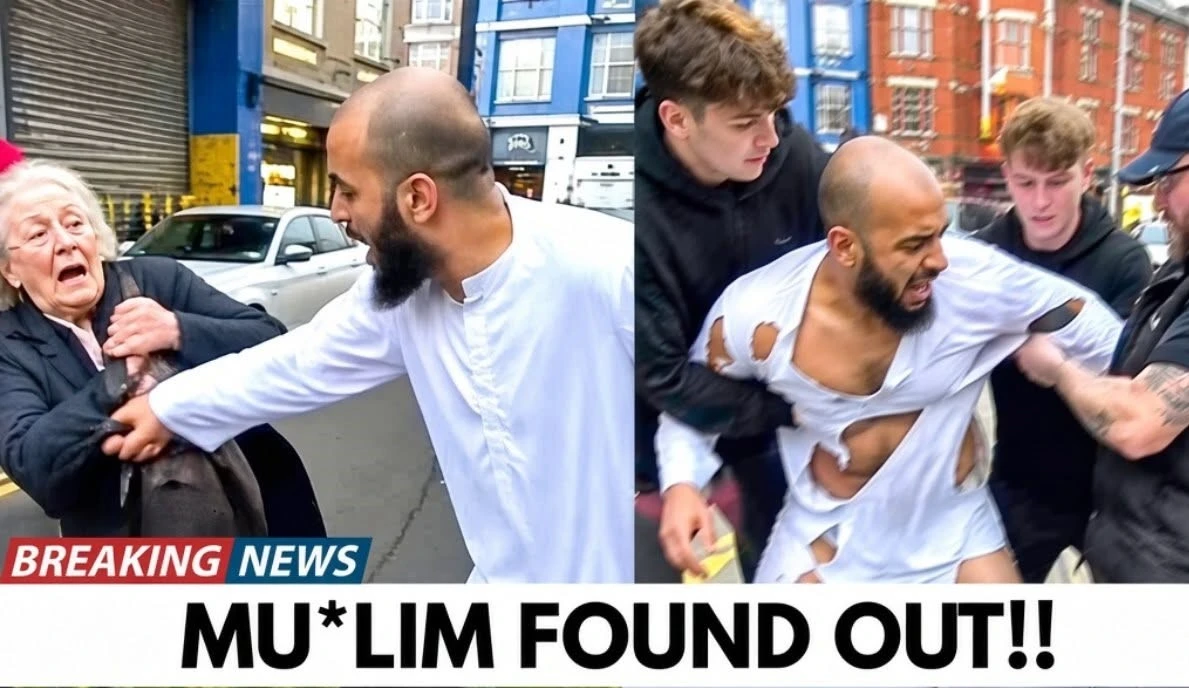
BRITAIN’S STREETS ARE CHANGING — AND NOW A NEW WARNING IS SPARKING FURY ACROSS ENGLAND! A series of disturbing incidents has reignited a fierce debate over immigration, crime and the future of Britain. From an alleged handbag-snatching attempt to confrontations on London transport, the video highlights scenes that are leaving many viewers asking a much bigger question: what is happening to the country they once knew? But the discussion quickly goes beyond individual incidents. Claims about immigration, cultural change and the growing political influence of different communities have triggered an explosive argument over where the line should be drawn—and whether Britain’s leaders have allowed things to go too far. As increasingly heated voices demand answers, one controversial argument in particular is now being pushed into the spotlight, prompting fierce reactions from supporters and critics alike.
Britain’s Changing Streets: Viral Confrontations Reignite Debate Over Immigration, Crime and Integration
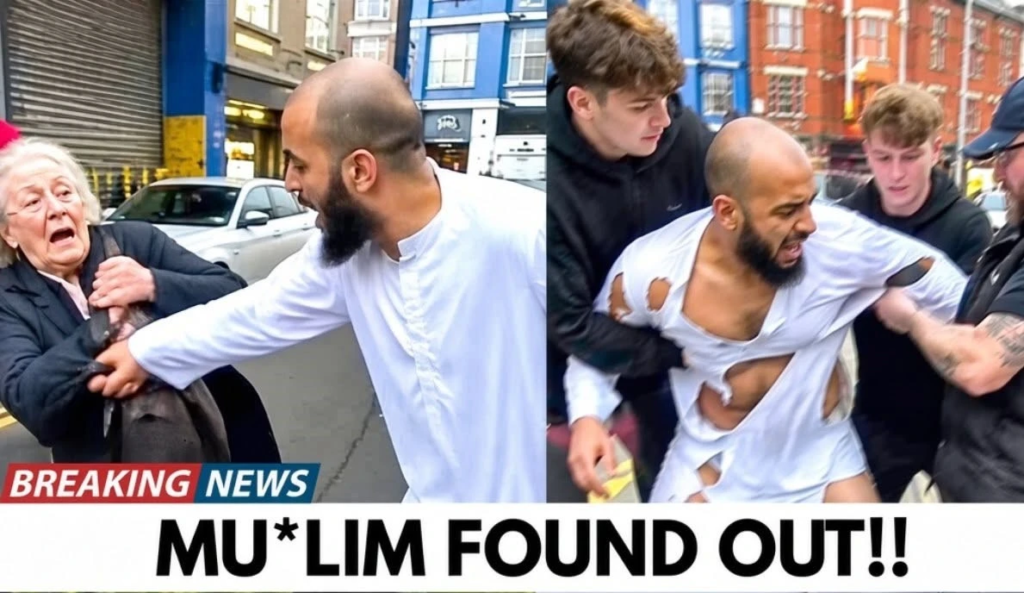
Disturbing clips of alleged thefts, confrontations and demonstrations are being used online to tell a much broader story about Britain’s future. But individual incidents cannot establish that a religious or immigrant community is responsible for national crime trends. Behind the inflammatory imagery, however, lies a genuine and increasingly difficult debate over migration, integration, public safety and social cohesion.
LONDON — A confrontation on a British street lasts only seconds on camera.
An elderly woman appears distressed. A man reaches toward her. Bystanders intervene. Another clip shows an argument on public transport. A third shows demonstrators carrying religious or political banners.
Uploaded separately, the videos might be viewed as unrelated incidents requiring their own explanations.
Placed together beneath dramatic captions about immigration, Islam and the supposed transformation of Britain, however, they become something much larger: a narrative about a country losing control.
That narrative is spreading rapidly across social media.
For some viewers, the images confirm fears they have held for years—that immigration has happened too quickly, integration has been inadequate and political leaders have refused to acknowledge the consequences.
For others, the videos demonstrate something different: how isolated incidents involving individuals can be selectively assembled to stigmatise millions of people because of their religion, ethnicity or presumed immigration background.
Both reactions point toward one of the most emotionally charged questions in contemporary Britain:
How should a country discuss genuine problems involving crime, immigration and integration without turning individual wrongdoing into collective guilt?
The distinction matters.
Britain is unquestionably changing.
Immigration has reshaped communities. Religious diversity has increased. Public anxiety about borders, housing, policing and cultural integration is politically significant.
But the most dramatic conclusions circulating alongside viral videos often go much further than the available evidence.
A person appearing in a video cannot automatically be assumed to be an immigrant from their appearance or clothing.
Religion cannot reliably be determined from an image.
And even where an offender’s immigration status or religion is established, one person’s conduct does not establish the behaviour of an entire population.
Those principles do not require Britain to avoid difficult questions.
They require those questions to be asked accurately.
The Viral Narrative: “What Happened to Britain?”
That question increasingly appears beneath videos of street crime, disorder and confrontations.
For older Britons in particular, rapidly changing neighbourhoods can create a powerful sense of cultural transformation.
Shops change.
Languages heard on the street change.
Religious buildings appear.
Schools become more diverse.
Migration becomes visible in everyday life.
Those changes are real.
But cultural change and criminality are separate questions.
A neighbourhood becoming more ethnically or religiously diverse does not itself demonstrate that it has become more dangerous.
Likewise, rising crime in a particular place does not automatically establish immigration as the cause.
Establishing causation requires evidence rather than visual association.
What the Image Does—and Does Not—Tell Us
The accompanying montage is particularly useful for understanding the problem.
The upper photographs appear to show a confrontation involving an older woman and a man.
The lower photograph depicts a demonstration involving people carrying banners, including one reading “DEFEND THE MUSLIMS.”
But those images alone do not establish the nationality, immigration status, religious beliefs or criminal responsibility of the people pictured.
Nor does placing the photographs together demonstrate a connection between the separate events.
The headline inserted into the montage attempts to provide that connection.
That is editorial framing—not evidence.
This distinction has become increasingly important in the era of algorithmic news.
A Viral Video Can Be Genuine and Still Create a Misleading Story
Misinformation does not always require fabricated photographs.
Sometimes every individual image is authentic.
The distortion occurs through selection and juxtaposition.
Imagine collecting 20 videos of crimes involving people from one demographic group while excluding thousands of offences involving everybody else.
Every video could be genuine.
The conclusion suggested by the collection could still be statistically meaningless.
That is why responsible reporting distinguishes between an incident and a trend.
An incident can be established through video, police reports and court records.
A trend requires systematic data.