
Cabinet Minister Angela Rayner is facing intense scrutiny and political backlash following her latest television appearance, during which she was challenged on the escalating English Channel migrant crisis.

The interview quickly became a flashpoint, highlighting the deep divides in how the government and its critics frame the ongoing influx of small boats.
Appearing on a news broadcast to discuss the recent interception of a “Boeing-sized” vessel carrying approximately 230 migrants—the largest single-boat crossing recorded to date—Rayner was asked to address the public’s reaction to the unprecedented scale of the crossings.
In her response, Rayner focused on the humanitarian tragedy and the criminality of the smuggling rings. She recalled the emotional impact of seeing a “toddler wash up on the shore,” expressing horror that criminal gangs continue to overload unseaworthy vessels and put “innocent lives of desperate people at risk.” She emphasized the government’s commitment to dismantling the smuggling networks, citing a new “pay by results” agreement with French authorities to intercept boats before they launch.

Rayner also reiterated that the government’s approach focuses on “practical steps,” asserting that current methods are already yielding a reduction in boat numbers and a “huge increase” in deportations of individuals present in the country illegally.
However, when pressed by the interviewer about the public’s growing “rage” over the crossings—particularly the perception that the Channel has become a “taxi service” rather than a desperate last resort—Rayner characterized the migrants primarily as “desperate, vulnerable people,” specifically mentioning women and children.
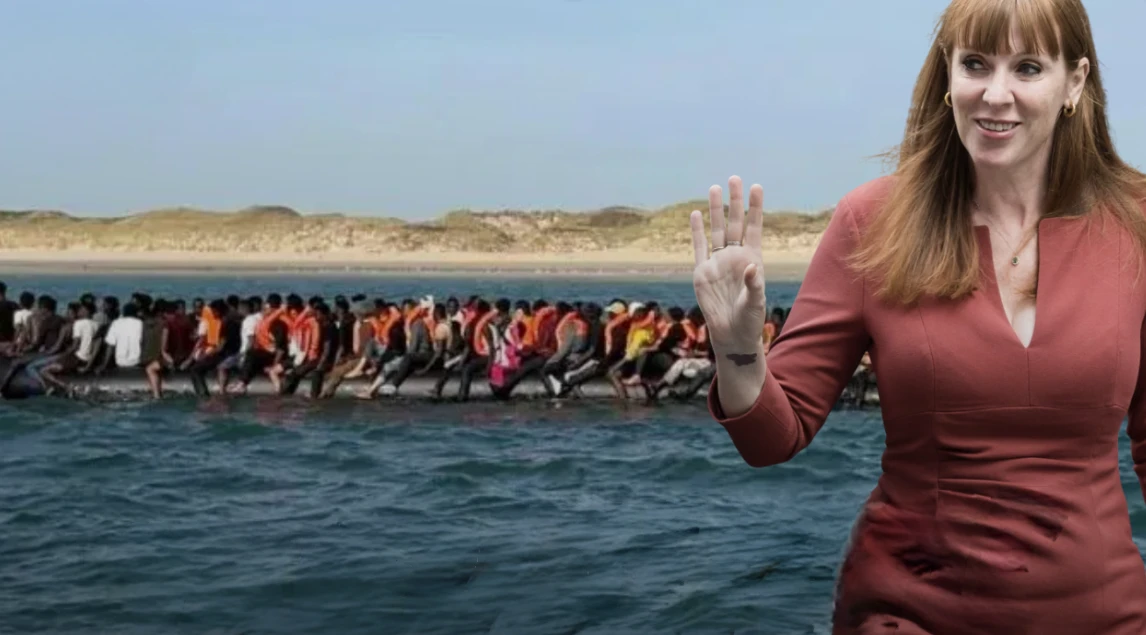
“We’re seeing people that are dying at sea that are desperate to come here,” Rayner stated, condemning the gangs for putting “often… children and women into vessels that are not seaworthy.”
Those remarks immediately ignited fierce criticism from right-wing commentators and political opponents, who accused Rayner of “gaslighting” the British public and deliberately misrepresenting the demographics of the arrivals.
Critics forcefully pushed back against Rayner’s narrative, pointing to long-standing statistical evidence showing that the overwhelming majority of individuals crossing the Channel in small boats—estimated by some border watchers to be between 85% and 90%—are adult males. Opponents argue that portraying the crisis as predominantly involving women and children is a calculated propaganda effort designed to manufacture sympathy and deflect from the reality of the situation.
Furthermore, detractors scrutinized Rayner’s reference to a toddler washing ashore. Commentators pointed out that the tragic 2015 incident involving young Alan Kurdi, which deeply impacted global discourse on the Syrian refugee crisis, occurred in Turkey, not the United Kingdom, accusing the minister of conflating events to manipulate domestic sentiment.
The backlash underscores the immense pressure facing the Labour government as it attempts to manage the border crisis. While the administration insists its diplomatic and law enforcement strategies are the only practical solutions, critics argue that the government’s rhetoric reveals a fundamental unwillingness to acknowledge the realities of economic migration, insisting that the individuals are bypassing safe European countries solely to exploit the UK’s welfare and economic infrastructure.