CAUGHT ON CAMERA: THE £662 MILLION BORDER SCANDAL!
“£662 Million Border Scandal” Row Erupts After Viral Video of French Police Fuels Small Boats Anger
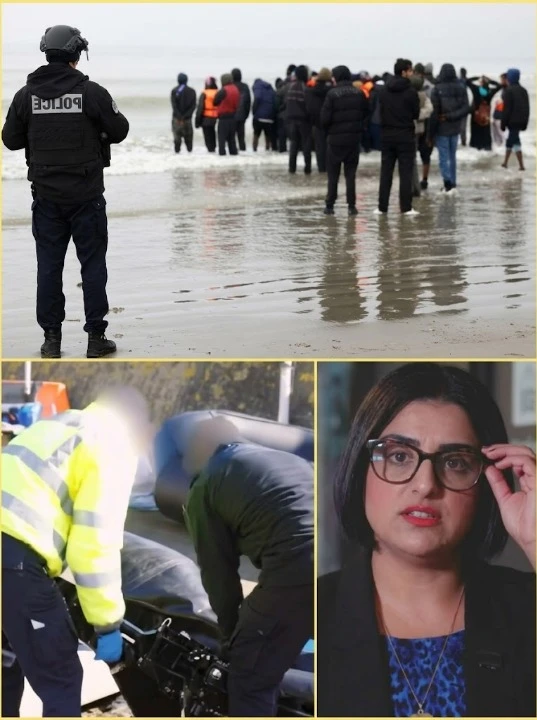
A viral video showing French police apparently allowing migrants to board or launch a small boat toward the UK has reignited fierce criticism of the government’s £662 million border deal with France.
The footage has been seized on by critics as proof that British taxpayers are being misled. The Home Office says cooperation with France has prevented more than 46,000 attempted small boat crossings since July 2024. But opponents argue that the latest images tell a different story: French officers standing nearby while boats still leave for British waters.
The row has now become a major political flashpoint. Is the UK-France deal stopping tens of thousands of crossings, as ministers claim? Or is the public being shown one set of statistics while the reality on the beaches looks very different?
The answer is complicated.
What the Government Says
The UK government says its cooperation with France is producing results. In April 2026, the Home Office announced a new UK-France agreement worth £662 million, designed to increase personnel, strengthen intelligence, target smuggling gangs and improve French capability along the northern coastline. The agreement included a 53% increase in personnel, from 907 funded staff in the 2023–2026 cycle to 1,392 in the 2026–2029 cycle. It also included specialist units to tackle smuggling networks and small boat departures.
A later parliamentary answer broke down the £662 million figure, saying the package included a £501 million foundation fund over three years, plus a flexible fund of £50 million in year one and £110 million in years two and three. The Home Office said the money was intended to maximise operational results and reduce small boat crossings.
Ministers have repeatedly argued that French cooperation has stopped large numbers of crossings. The government has said more than 46,000 attempted crossings have been prevented since July 2024, while a previous statement cited more than 42,000 stopped attempts since the election.
That is the government’s case: the deal is expensive, but it is preventing many boats from reaching the Channel.
Why the Video Caused Outrage
The problem for the Home Office is that one viral video can damage public confidence more than a dozen statistics.
Recent footage showed French police apparently telling British Conservative MP Chris Philp that they had orders not to stop people getting into boats and setting off for the UK. One officer was reported as saying: “Our order is to let them go.” The Guardian reported the exchange while also noting that French riot police, although funded by the UK, maintain operational independence in France.
That distinction is crucial.
The video appears damaging because it seems to show police allowing a departure. But it does not automatically prove that the Home Office secretly ordered French officers to stand down. French police operate under French law, French command structures and French operational rules. UK funding does not mean UK ministers directly command French officers on the beach.
Still, the political impact is obvious.
To many voters, the video looks like proof that the system is broken: Britain pays, France patrols, boats still leave.
The “Full Picture” Defence
The Home Office has pushed back against online claims that French law enforcement is failing entirely. It says social-media clips do not show the full scale of prevented crossings, arrests, intelligence work and disrupted smuggling operations.
Official statements say new specialist French units have been deployed in northern France, including riot and crowd-control officers trained to deal with hostile groups and evolving smuggler tactics.
The Home Office has also said the French have expanded maritime tactics to target so-called “taxi boats,” where smugglers launch boats away from the main group and pick up migrants waiting in the water. According to a June Home Office update, French authorities had stopped six migrant taxi boats in two months, returned migrants to France and secured prison sentences and deportation for five smugglers.
This is the government’s defence: isolated footage may be real, but it does not prove the entire operation is fake.
The Critics’ Argument
Critics are not convinced.
They argue that the government’s “prevented crossings” figure is difficult for the public to verify. If a group is stopped one day but returns to the beach another day, should that count as a prevented crossing? If police delay a launch rather than permanently stopping a journey, how is that measured? If a boat gets away while officers watch, how can taxpayers trust the system?
That is why the viral video has landed so strongly. It turns a technical policy argument into a simple visual question: if Britain is spending hundreds of millions of pounds, why are boats still leaving?
This is also why Reform UK and other critics have used the issue to attack both Labour and Conservative records on the border. They argue that cooperation with France has become a costly holding pattern rather than a genuine solution.
What the Numbers Show
The government can point to falling crossing numbers in 2026 compared with the previous year. The Guardian reported that small boat crossings from January to mid-July 2026 were down 43% compared with the same period in 2025, falling from 21,690 to 12,469.
That is a significant reduction.
But the same reporting noted that more than 2,000 people had crossed since Andy Burnham entered No. 10, and that it is difficult to measure exactly how much of the fall is due to policy rather than factors such as weather. The Guardian also noted that French police enforcement and the “one in, one out” scheme had not appeared to significantly deter people from trying to reach the UK.
So both sides can claim evidence.
The government can say crossings are down and thousands of attempts have been stopped.
Critics can say boats are still arriving, deterrence remains weak, and the public still lacks transparency.
The Legal and Operational Gap
The core problem is not hidden. It is structural.
French police can intervene on land. They can disrupt groups, seize equipment, arrest suspected smugglers and prevent launches in some circumstances. But once people are in the water, especially in overcrowded and dangerous boats, officers face legal and safety limits.
Intervening too aggressively can risk capsizing boats, causing injury or triggering a deadly incident. Smugglers exploit that gap by launching quickly, using violence, dispersing groups, or sending “taxi boats” to pick people up from the water.
That means the public may see officers nearby while a boat leaves, even though the operational reasons are more complicated than simply “letting them go.”
But this explanation does not fully solve the political problem.
If the public sees repeated footage of boats leaving, confidence collapses — even if officials can point to other operations that prevented crossings elsewhere.
Is It a Scandal?
The word “scandal” depends on what is being claimed.
It is fair to say there is a serious accountability question. Taxpayers are entitled to ask what the £662 million is buying, how prevented crossings are counted, how French operational limits work, and whether the deal is delivering value for money.
It is also fair to say the viral video raises legitimate questions about beach enforcement and whether the public has been given a complete picture.
But it is not yet proven that the Home Office secretly ordered French police to allow boats to leave. Nor is it proven that the 46,000 stopped-crossings figure is fabricated. The stronger, evidence-based criticism is that the government’s headline figures may not fully explain what is happening on the beaches.
That is a real issue without needing to invent a conspiracy.
Conclusion: A Costly Deal, a Damaging Video, and a Trust Problem
The latest viral footage has exposed a major trust problem at the heart of Britain’s small boats policy.
The government says UK-France cooperation has stopped more than 46,000 attempted crossings and that the £662 million deal is strengthening enforcement against smuggling gangs.
Critics point to footage of French police apparently allowing a boat to launch and ask why British taxpayers are paying so much if crossings continue.
Both points matter.
A single video does not tell the whole story.
But neither do headline statistics.
The public deserves clearer answers: how many crossings are truly prevented, how many people try again later, what French police are legally allowed to do, and what success is supposed to look like.
Until those questions are answered, every new boat launch and every new viral clip will deepen the suspicion that Britain is paying for control without actually getting it.