
“DEPORT ALL MUSLIM WHO REFUSE TO INTEGRATE!”
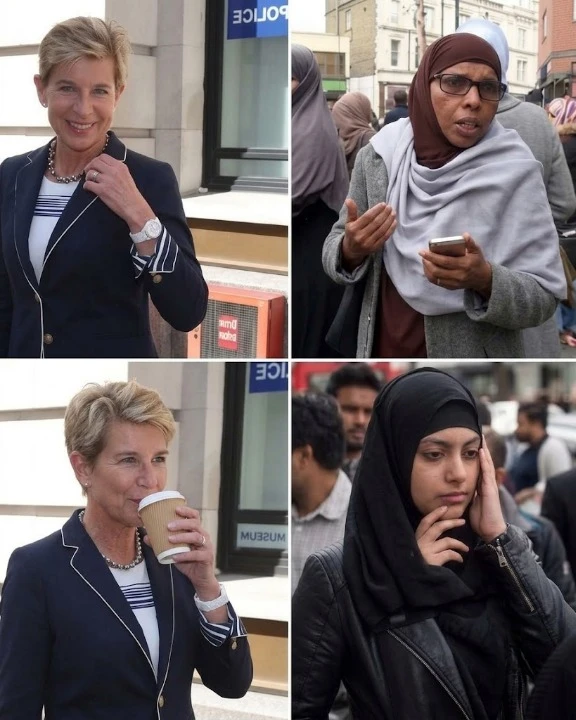
Katie Hopkins’ “Deportation” Remark Reignites Britain’s Fiercest Argument Over Integration, Law and Religious Identity
A viral claim says commentator Katie Hopkins has sparked outrage by calling for the deportation of Muslims who “refuse to integrate” or “abide by British law and values.” The wording has spread quickly because it combines three of Britain’s most sensitive issues: immigration, Islam, national identity and the rule of law.
But the claim needs careful handling. I could not find a strong mainstream report confirming the exact quote, the precise venue, or the claimed “heated debate in Parliament” around this specific wording. That means the responsible way to report it is as a viral claim and political controversy, not as a fully verified parliamentary event.
What is real is the wider argument it has reopened: how should Britain respond to people who reject its laws or promote extremism — without turning that concern into collective suspicion of Muslims as a whole?
The Line Between Integration and Collective Blame
The phrase “deport all Muslims who refuse to integrate” is politically explosive because it targets a religious group rather than a clear legal category. Britain has millions of Muslim citizens and residents who work, vote, study, serve in public life, run businesses, raise families, and obey the law. Treating “Muslims” as a deportable class would be both morally wrong and legally impossible.
British citizens cannot simply be deported for holding unpopular beliefs or belonging to a religion. Official Home Office guidance states that British citizens are not subject to immigration control and cannot be considered for deportation. Deportation applies to foreign nationals, and even then decisions must be made according to law, evidence, individual conduct and the UK’s human-rights obligations.
That distinction matters. A lawful state can act against extremists, foreign criminals, hate preachers, terrorists, people who incite violence, or foreign nationals whose presence is judged not conducive to the public good. But it cannot punish an entire faith community for the alleged conduct or views of some individuals.
What Supporters Hear in Hopkins’ Message
Hopkins’ supporters are likely to argue that the phrase is being deliberately interpreted in the harshest possible way. They may say the real point is not religion, but loyalty to British law: anyone living in Britain should accept the country’s legal system, equality rules, democratic institutions, and basic civic norms.
That argument has public force. Many Britons are worried about integration, extremism, parallel communities, social cohesion, and whether public authorities apply the same standards to everyone. Recent polling reported by The Guardian found that 42% of Britons believed Muslims could not integrate into British society, while the same report noted that polling of British Muslims showed a very different picture: 85% favoured integration, 88% said they mixed comfortably with people of other faiths, and 85% said they felt free to practise their religion.
Those numbers show why the debate is so charged. There is a real perception gap between what many people fear and how many British Muslims describe their own lives.
What Critics Find Dangerous
Critics argue that language like this does not merely criticise extremism. It risks placing ordinary Muslims under suspicion.
The phrase “refuse to integrate” is also vague. Does it mean committing crimes? Advocating violence? Rejecting democracy? Living in a religiously conservative household? Wearing religious clothing? Disagreeing with secular liberal values? Choosing to socialise mostly within one’s own community?
A democratic society must be precise. Criminal conduct can be prosecuted. Incitement can be investigated. Foreign nationals who pose a threat can be excluded or deported under legal powers. But vague cultural accusations should not become a basis for stripping people of belonging.
The UK government’s definition of anti-Muslim hostility warns that such hostility can affect Muslims and also people perceived to be Muslim, including Sikhs, Hindus and people who have left Islam. That is why sweeping rhetoric can have consequences beyond the target named in a viral post.
What the Law Actually Allows
British law already gives the state powers to act against dangerous foreign nationals. The Home Secretary can exclude a non-British citizen if their presence is not conducive to the public good. Immigration rules also allow refusal of entry where a person’s character, conduct or associations make it undesirable to grant permission.
But those powers are individual, not collective. They require evidence and legal process. They cannot be converted into a blanket policy against a religion.
That is the central difference between a serious law-and-order argument and an inflammatory slogan. Britain can deport foreign criminals in lawful cases. It can exclude extremists. It can prosecute people who incite violence. It can defend secular courts and one civil legal system. What it cannot do is deport “Muslims” as a group because some commentator claims they have failed a cultural test.
The Real Integration Debate
Britain does need an honest conversation about integration. That means asking whether people share enough common language, civic knowledge, legal understanding, and commitment to democratic norms to live together peacefully.
But integration is not assimilation by force. It does not mean everyone must dress the same, worship the same, eat the same food, hold identical opinions, or abandon religious identity. A confident country can defend its laws while allowing religious freedom.
The key principle should be simple: one law for all, equal rights for all, no special exemption for coercion or extremism.
That principle protects everyone. It protects secular citizens from religious intimidation. It protects Muslim women from coercive control. It protects Christian, Jewish, Hindu, Sikh and atheist citizens from harassment. It also protects peaceful Muslims from being blamed for extremists they do not support.
Why Parliament Would React Strongly
Even if the exact parliamentary confrontation in the viral claim remains unverified, it is easy to see why such remarks would trigger political outrage.
MPs would divide along familiar lines. Some would say the comments reflect public frustration with failed integration, weak borders, and political cowardice. Others would say the remarks amount to anti-Muslim scapegoating and risk fuelling hostility against British citizens.
Both sides would likely claim to be defending Britain. One side would emphasise borders, law and social cohesion. The other would emphasise equality, religious freedom and protection from collective blame.
The danger is that the debate becomes a shouting match rather than a policy discussion.
What a Responsible Policy Would Look Like
A serious response would avoid both denial and hysteria.
It would enforce deportation law against foreign criminals where lawful. It would exclude extremists who incite hatred or violence. It would protect women and children from coercion inside any community. It would fund English-language learning, civic education and integration programmes. It would also confront anti-Muslim hatred when ordinary people are targeted because of faith, appearance or background.
That approach would be tougher than symbolic outrage and fairer than collective blame.
Conclusion
The viral claim about Katie Hopkins has gained attention because it speaks to a real anxiety in Britain: whether the country can defend its laws, identity and social cohesion in an age of high migration and cultural tension.
But the phrase itself is dangerous if taken literally. Britain cannot and should not deport people because they are Muslim. It can act against individuals who break the law, promote violence, incite hatred, or have no legal right to remain.
The distinction is everything.
A free society must be strong enough to reject extremism — and principled enough not to punish an entire faith for it.