
Diplomatic Tensions Grow After Reports of UK Entry Dispute Involving Polish MEP Dominik Tarczyński
Political debate intensified across Europe after reports circulated on social media claiming that Polish Member of the European Parliament Dominik Tarczyński had been prevented from entering the United Kingdom to attend a public event. The online discussion quickly expanded beyond the reported border incident itself, with supporters and critics presenting sharply different interpretations of what the episode might mean for relations between Britain and Poland, freedom of political expression, and the management of international visitors.
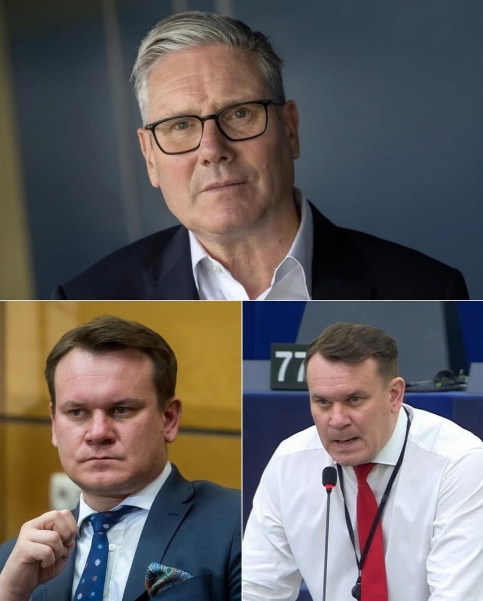
At the time of writing, however, many of the claims circulating online remain either disputed or unverified, making it important to distinguish confirmed information from political rhetoric and speculation.
According to accounts shared by Mr. Tarczyński and his supporters, the dispute began when he attempted to travel to the United Kingdom for what was described as a public gathering involving political discussion. Supporters alleged that British border authorities refused him entry, prompting accusations that the decision represented an attempt to silence political viewpoints rather than a routine immigration or security determination. Officials have not publicly confirmed every aspect of the claims circulating online, leaving important questions unanswered regarding the precise legal basis for any decision that may have been taken.
The controversy rapidly escalated after reports suggested that Mr. Tarczyński intended to pursue legal action connected to the incident. Social media posts characterized the dispute as a direct challenge to Prime Minister Keir Starmer’s government, although legal experts note that any court proceedings would ultimately depend on the specific legal grounds presented and the governmental authority responsible for the decision being challenged. Border control decisions in the United Kingdom are generally carried out under statutory immigration powers rather than through direct personal decisions made by the Prime Minister.
Within hours, the story spread across multiple social media platforms, where hashtags relating to Britain, Poland, free speech, and border security attracted significant attention. Supporters argued that elected representatives should be able to travel freely to participate in peaceful political events among democratic allies. Others countered that every sovereign nation retains the legal authority to determine who may enter its territory, provided those decisions are consistent with domestic legislation and applicable international obligations.
The developing controversy has also highlighted broader disagreements over the balance between national sovereignty and political openness. Successive British governments of different political parties have maintained that border security remains a core responsibility of the state and that immigration officers possess statutory authority to assess entry on an individual basis. Critics of broad discretionary powers, however, argue that transparency becomes especially important whenever high-profile political figures are involved, since unclear decisions can fuel accusations of bias regardless of the underlying facts.
In Poland, reactions have reflected the country’s increasingly polarized political environment. Supporters of Mr. Tarczyński described the reported incident as an unacceptable restriction affecting an elected representative of a European Union member state. Some commentators argued that democratic societies should welcome robust political debate, even when opinions are controversial. Others urged caution, emphasizing that all available facts should be established before drawing conclusions about the motives behind any governmental action.
The dispute has inevitably become intertwined with wider debates surrounding immigration, public demonstrations, and freedom of expression in Britain. These issues have dominated political discussion in recent years, particularly following growing disagreements over asylum policy, border enforcement, and public order legislation. Against that backdrop, any incident involving an outspoken foreign politician is likely to attract significant public attention and become part of broader arguments extending well beyond the circumstances of a single case.
Constitutional and immigration law specialists note that governments generally possess considerable discretion over admission decisions involving foreign nationals. Nevertheless, such powers are not unlimited. Individuals who believe an administrative decision was unlawful may seek legal remedies where appropriate, although the availability and scope of judicial review depend on the specific statutory framework and factual circumstances. Simply because a legal challenge is announced does not necessarily indicate that a court will ultimately rule in favor of either party.
Political analysts also caution against interpreting social media reactions as definitive indicators of public opinion. Online platforms often amplify emotionally charged language, particularly when disputes involve national identity, sovereignty, or freedom of speech. Dramatic headlines may generate millions of views within hours, but they frequently contain claims that remain unverified while official statements and legal documents are still emerging.
The episode has also drawn renewed attention to diplomatic relations between Britain and Poland. The two countries maintain extensive cooperation through NATO, economic partnerships, and longstanding people-to-people connections. Hundreds of thousands of Polish citizens live and work in the United Kingdom, while both governments regularly cooperate on defense, security, and regional stability. Observers therefore note that any high-profile disagreement involving senior political figures inevitably attracts attention because it unfolds against a broader relationship that remains strategically significant.
Supporters of the British government’s broader immigration approach argue that consistent enforcement of border rules is essential regardless of an individual’s political prominence. They contend that equal application of the law strengthens public confidence in immigration controls. Critics, however, maintain that transparency and detailed explanations become even more important when decisions involve elected officials whose exclusion may carry diplomatic consequences and generate allegations of political discrimination.
If legal proceedings are formally initiated, the case could attract considerable interest from constitutional lawyers, diplomats, and political observers across Europe. Any litigation would likely focus on whether the relevant statutory powers were exercised lawfully, whether procedural faimess requirements were met, and whether any applicable human rights considerations were engaged. Courts typically examine evidence, legislation, and administrative reasoning rather than political arguments presented in public debate.
The controversy also illustrates how quickly modern political disputes can evolve into international stories. Within a matter of hours, a reported border incident became the subject of intense online discussion involving questions of sovereignty, democratic participation, diplomatic relations, and freedom of expression. While social media has accelerated the spread of information, it has equally increased the importance of distinguishing verified facts from commentary, opinion, and speculation.
For Prime Minister Keir Starmer’s government, the episode has generated additional scrutiny during an already challenging political period marked by continuing debates over immigration policy and Britain’s international relationships. Opposition figures and commentators from across the political spectrum have used the reports to reinforce broader arguments about government priorities, border management, and civil liberties. At the same time, ministers are likely to remain cautious about commenting extensively on any matter that could become subject to legal proceedings.
Ultimately, the significance of the controversy will depend less on the intensity of online reactions than on the factual record established through official statements and, if applicable, judicial proceedings. Until more verified information becomes available, many of the most dramatic claims circulating online should be treated with caution. What is already clear, however, is that the reported dispute has reignited debate across Britain and Poland about the intersection of border policy, democratic politics, and the increasingly complex relationship between national sovereignty and international political engagement.