
Fourteen Migrants Reported Dead After Boat Collides With Coast Guard Vessel During Sea Operation
A tragic incident at sea has left 14 migrants reported dead after a small boat collided with a coast guard vessel during an operation, according to initial reports. Authorities are now investigating the circumstances surrounding the collision, as questions grow over maritime safety, border enforcement, rescue procedures, and the risks faced by migrants attempting dangerous sea crossings.
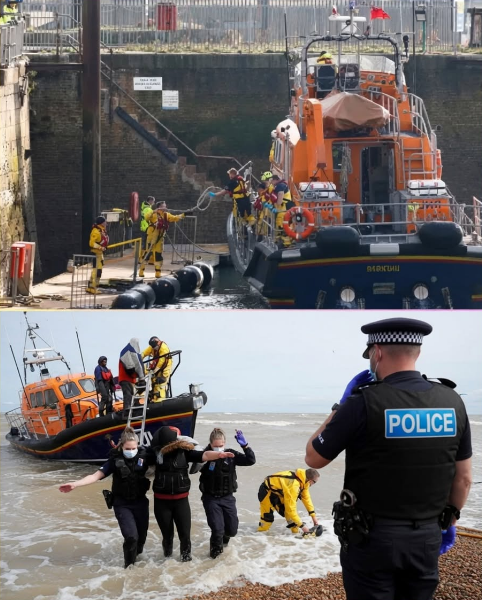
At this stage, the details remain limited. Initial accounts point to a collision during an attempted interception or rescue operation, but investigators still need to establish exactly how the vessels came into contact, whether warning signals were given, what speed each vessel was travelling. whether the migrant boat was overloaded, and whether poor visibility, panic, manoeuvring, or operational error played a role.
A similar reported case earlier this year involved a migrant speedboat and a Greek coast guard patrol vessel near Chios, where accounts differed over whether the migrant vessel ignored signals and rammed the patrol boat or whether the coast guard’s actions contributed to the collision. That incident reportedly left 15 people dead and highlighted how contested these maritime operations can become when survivors, authorities, and rights groups give different versions of events.
A Deadly Moment at Sea the deaths of 14 people have turned what may have begun as a border-control or rescue operation into a major maritime tragedy.
Small boats carrying migrants are often overcrowded, unstable, poorly equipped, and unsuitable for open water. Many are controlled by smugglers who launch vessels in dangerous conditions, sometimes without enough fuel, navigation equipment, life jackets, or trained operators. When coast guard vessels approach, the situation can become chaotic within seconds.
People may panic.
The boat may turn sharply.
Passengers may shift weight suddenly.
A smuggler or pilot may try to flee.
A patrol vessel may attempt to block, shadow, or intercept the craft.
In rough water, at night, or during a high-pressure operation, even a small mistake can become fatal.
What Investigators Must Determine
The central question is not simply that a collision happened. It is why it happened.
Investigators will likely examine radio communications, vessel tracking data, survivor testimony. coast guard statements, weather conditions, radar records, body-camera footage if available, and any video filmed by passengers or officers.
They will need to determine whether the coast guard followed proper maritime procedure, whether the migrant boat ignored orders, whether the operation was a rescue or pursuit, and whether the collision could have been avoided.
They will also need to establish whether the dead were trapped, thrown into the water, struck by impact, or drowned after the vessel became unstable.
Those details matter because they will shape public understanding of responsibility.
Border Enforcement Versus Rescue Duty
The incident has reopened one of the hardest questions in migration policy: how should authorities enforce borders at sea while also protecting life?
Coast guards are often asked to do two difficult jobs at once. They must prevent illegal crossings, disrupt smugglers, and protect national borders. At the same time, they have a legal and moral duty to rescue people in distress.
Those missions can come into tension. A boat may be part of an illegal crossing but still carry human beings whose lives are at immediate risk. A vessel may be intercepted as part of border enforcement, but once danger emerges, rescue becomes the priority.
Critics of aggressive border operations argue that high-speed pursuits, blocking manoeuvres, and pushback-style tactics can tum already dangerous journeys into deadly disasters.
Supporters of stronger enforcement respond that smugglers deliberately exploit rescue obligations by launching unsafe boats and expecting authorities to intervene once passengers are in danger.
Both arguments reflect part of the truth.
Smuggling networks create the conditions for tragedy.
But state authorities still have a responsibility to conduct operations safely.
A Wider Pattern of Deadly Migration Routes
The reported collision comes amid a broader pattern of migrant deaths at sea. The Mediterranean, Atlantic, and West African routes remain among the world’s most dangerous migration corridors. In recent days, the United Nations refugee agency reported that more than 100 migrants were dead or missing off West Africa in separate incidents near Mauritania, including one boat that drifted for weeks after running out of fuel.
Another recent tragedy off Libya involved a migrant boat carrying about 60 people that capsized near Tobruk, leaving at least 50 dead or missing, according to AP reporting.
These incidents show that migrant sea journeys are not isolated emergencies. They are part of a continuing humanitarian crisis driven by war, poverty, persecution, weak legal pathways, smuggling networks, and increasingly strict border controls.
Why Small Boats Are So Dangerous
Small migrant boats are often not designed for the journeys they are forced to make.
They may be inflatable, overcrowded, underpowered, and handled by people with little maritime experience. In many cases, passengers have no life jackets or survival training. Children, pregnant women, elderly people, and injured passengers may be on board.
When a larger coast guard vessel approaches, the physical imbalance between the boats matters. The wake from a patrol vessel can destabilise a smaller craft. A sudden turn can throw passengers overboard. A collision can rupture an inflatable hull or crush people caught between vessels.
That is why maritime experts often stress caution during interceptions. The goal must be to stop smugglers and prevent illegal crossings without increasing the risk to passengers.
The Political Fallout
The deaths are likely to intensify political debate.
Supporters of strict border enforcement will argue that the tragedy proves the need to stop the
smugglers before boats ever launch. They will say governments must dismantle trafficking networks. increase patrols, and make illegal crossings less attractive.
Human rights groups will likely focus on how the operation was conducted. They will ask whether the coast guard used proportionate methods, whether passengers were treated as people in distress, and whether authorities prioritised safety over interception.
Families of the dead will want answers more than slogans.
Who gave the orders?
What exactly happened in the final moments before impact?
Could the collision have been prevented?
Were rescue efforts immediate and adequate?
Will anyone be held accountable if procedures were violated?
The Problem With Early Narratives
In maritime tragedies, early narratives often harden before investigations are complete.
Authorities may say the migrant boat ignored warnings.
Survivors may say they were rammed or forced into danger.
Activists may accuse the coast guard of reckless conduct.
Government supporters may blame smugglers entirely.
The truth can be more complicated. A vessel may ignore instructions and still be owed safe handling. A coast guard may follow procedure and still make a fatal mistake. Smugglers may be the original cause of danger, while state tactics may worsen the immediate risk.
That is why independent investigation matters.
What a credible Investigation Should Include
A credible investigation should be transparent, evidence-based, and independent enough to command public trust.
It should examine vessel movements, speeds, angles, lighting, communication, training, rules of engagement, survivor testimony, and rescue response time. It should also investigate the smuggling
network that placed people on the boat in the first place.
If coast guard personnel acted properly, the evidence should show that.
If they acted recklessly, the public must know.
If smugglers forced passengers into danger, that must also be exposed.
The dead deserve more than political talking points.
They deserve the truth.
Conclusion
The reported deaths of 14 migrants after a collision with a coast guard vessel have turned a border operation into a tragedy with major legal, humanitarian, and political consequences.
The facts are still being established, and it would be irresponsible to assign final blame before investigators complete their work. But the incident already raises urgent questions about how maritime enforcement is conducted, how smugglers exploit vulnerable people, and how governments can protect borders without putting lives at greater risk.
At sea, the line between enforcement and rescue can disappear in seconds.
When it does, the first duty must be to save lives.