
Harry Redknapp has ignited a fierce row with his blunt comments on migration.
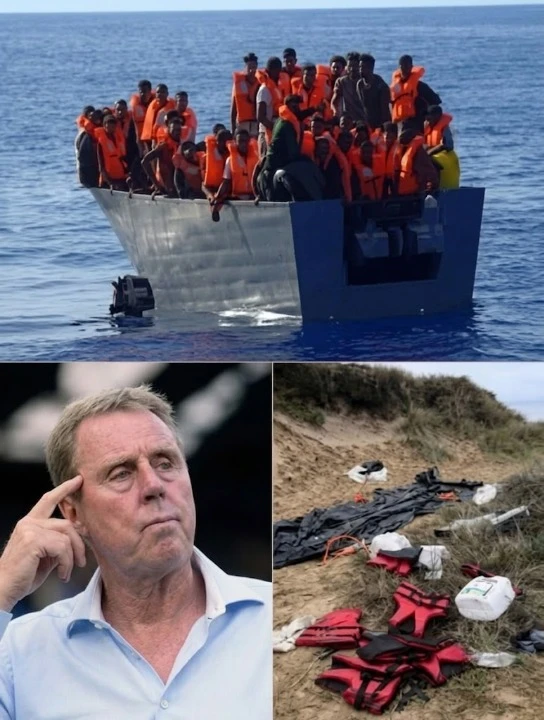
Harry Redknapp’s “Overrun” Migration Remark Reignites Britain’s Argument Over Borders, Public Services and Political Honesty
Harry Redknapp has sparked a fierce national row after reportedly saying Britain had been “overrun” while discussing migration. His words drew immediate criticism from those who saw the language as inflammatory, but they also attracted strong support from people who believe he voiced a frustration that many voters feel but few public figures say aloud.
The controversy has spread because immigration is already one of Britain’s most sensitive political issues. Recent polling has shown immigration remains one of the public’s top concerns, while official figures show a complicated picture: net migration has fallen from recent highs, but public pressure over visas, small boats, asylum accommodation, housing and public services remains intense. Home Office statistics for the year ending March 2026 recorded 779,000 non-visit visas issued, while the government has also pointed to tougher enforcement measures and efforts to remove people with no right to remain.
Why the Comment Hit a Nerve
The word “overrun” is politically powerful because it suggests loss of control. For Redknapp’s supporters, that is exactly the point. They argue that Britain has changed too quickly, that housing and services are under pressure, and that ordinary people are often accused of prejudice simply for saying the system feels unsustainable.
That feeling is not limited to party politics. It appears in arguments about GP access, school places, rents, social housing, asylum hotels, small boats, illegal working and public safety. Many voters do not separate these issues into neat policy categories. They experience them as one larger question: is the state still in control?
That is why a comment from a former football manager can become a national political moment. Redknapp is not a minister or a migration expert. But because he is a familiar public figure, his blunt wording became a symbol of a wider mood.
Why Critics Objected
Critics argue that “overrun” is the wrong word because it risks turning a debate about policy failure into suspicion of people. Migration includes many different groups: NHS staff, care workers, students, skilled workers, family migrants, refugees, asylum seekers, people arriving legally and people entering irregularly. Treating all of them as one problem blurs important distinctions.
They also warn that Britain’s housing crisis, NHS pressures and infrastructure problems cannot be blamed on migrants alone. Underbuilding, poor planning, workforce shortages, ageing demographics, council funding pressure and long-term political choices all matter. Migration can intensify pressure, but it is not the only cause.
That distinction matters because a fair debate should be able to criticise policy without dehumanising people.
The Numbers Are Not Simple
Part of the tension comes from the gap between national figures and local experience. Net migration has fallen sharply from its recent peak, with reporting in May noting a fall of nearly 50% after government promises to cut numbers. But a lower number than last year does not automatically feel like relief in communities already struggling with rent, healthcare access or local-service pressure.
A national statistic may show improvement. A local resident may still see overcrowded housing, longer waiting lists, new accommodation sites, or visible strain on services. Both experiences can be real at the same time.
That is why public trust is so fragile. People are not only asking whether the numbers are rising or falling. They are asking whether politicians are being honest about the trade-offs.
Supporters Say He Spoke Plainly
Those defending Redknapp say his critics are missing the point. They argue that ordinary people have been told for years to be careful, polite and quiet while the country changes around them. To them, the backlash proves that public debate is still too controlled by Westminster, media institutions and campaign groups that are uncomfortable with blunt language.
Their case is simple: Britain needs stronger border control, lower overall pressure, faster asylum decisions, more removals of people with no right to remain, and serious planning for housing and services.
From this perspective, Redknapp did not create the anger. He exposed it.
Critics Say Bluntness Can Become Blame
Opponents respond that public figures have a responsibility to avoid language that can inflame hostility. They argue that migrants are often blamed for failures caused by governments, landlords, employers, councils and weak planning.
They also worry that broad language can spill over onto settled minority communities, including British citizens who are treated as outsiders because of their appearance, religion, accent or family background. A debate about immigration policy should not make people who are already part of Britain feel targeted.
That is the line critics believe Redknapp’s wording risked crossing.
The Real Issue Is Trust
The deeper issue is not one sentence. It is whether Britain still trusts its institutions to manage migration fairly and competently.
Many voters do not believe governments can control borders, enforce rules, remove those with no right to stay, or plan properly for population growth. At the same time, many migrants and minority communities do not trust the public debate to treat them fairly.
That double mistrust is dangerous. It turns every celebrity comment, viral clip or local incident into a national flashpoint.
Conclusion
Harry Redknapp’s reported “overrun” remark has become explosive because Britain is already divided over migration. Supporters hear honesty. Critics hear dangerous simplification.
Both reactions reveal something true. Britain needs a more honest debate about immigration, housing, public services, border control and local consent. But honesty must be paired with accuracy and humanity.
It should be possible to say migration has been too high, that the asylum system is under pressure, and that communities deserve a voice.
It should also be possible to say that migrants are people, not a wave, and that national failures should not be dumped onto individuals who did not design the system.
The real question is not whether Redknapp was allowed to speak bluntly. He was.
The real question is whether Britain can turn blunt frustration into serious policy before the argument becomes even more bitter.