
HE SAID WHAT MANY WERE THINKING” — HARRY REDKNAPP SPARKS FIERCE MIGRATION DEBATE
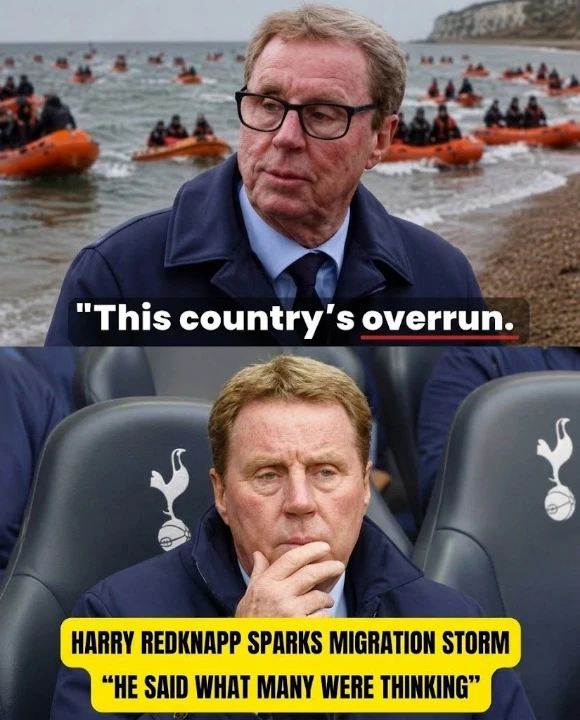
Harry Redknapp’s Migration Comments Reopen Britain’s Most Sensitive Debate
Harry Redknapp has sparked a fresh national debate after reportedly sharing blunt views on Britain’s migration challenges, with supporters praising him for saying what many people privately think and critics warning that celebrity interventions can make a complex issue sound simpler than it really is.
The exact wording of Redknapp’s latest remarks has not been clearly verified in major mainstream reporting available from current searches, so it should be treated with caution rather than repeated as settled fact. What is clear is the reaction: immigration remains one of Britain’s most emotionally charged political issues, and when a familiar public figure speaks about it, the comments quickly become part of a much larger argument about borders, housing, asylum, public services and national identity.
Why the Comments Cut Through
Redknapp is not a government minister or migration specialist. That is partly why the story has travelled so widely. For many people, a football figure speaking plainly about immigration sounds closer to everyday pub-table frustration than Westminster language.
Supporters of his intervention say the country has reached a point where ordinary concerns are too often dismissed. They argue that people can see pressure on housing, GP appointments, schools, roads, wages and local services, yet are told that raising questions about immigration is divisive or prejudiced.
That is the phrase driving the reaction: “he said what many were thinking.”
But critics respond that the phrase can be dangerous when it turns a broad national anxiety into a single target. Migration is not one thing. It includes workers, students, refugees, asylum seekers, family migrants, people with no legal right to remain, and people waiting for decisions in an overstretched system.
The Bigger Immigration Picture
Britain’s migration debate has intensified because the public sees several pressures at once. The government has promised tougher enforcement, including plans to double the Immigration Enforcement budget by 2028–29 and increase staffing by 60% from 2024 levels in 2026–27. Ministers say the aim is to remove more people with no right to stay and restore public confidence in the system.
At the same time, asylum, small boats and accommodation remain politically explosive. The Home Secretary said in March 2026 that Britain’s asylum offer would be changed, including a move toward reviewing refugee protection more regularly rather than treating it as an automatic permanent route.
Those changes show that even the government accepts the system is under pressure. But public trust is still fragile because many voters judge policy not by speeches, but by what they see in their own towns.
Supporters Say He Spoke Honestly
Those defending Redknapp argue that public figures should not be afraid to speak about migration, especially when politicians have struggled to restore confidence.
Their argument is not always anti-migration. Many supporters distinguish between legal migration, which they may accept if properly controlled, and illegal migration or poorly managed asylum accommodation, which they see as a failure of government.
They say communities need honest answers: how many people are arriving, where they are being housed, how much accommodation costs, how quickly claims are processed, and why people with no right to remain are not removed faster.
For this side of the debate, Redknapp’s comments are powerful because they sound unscripted. He is seen as voicing frustration that has been building for years.
Critics Warn Against Oversimplification
Critics argue that migration cannot be reduced to a single angry headline. Britain’s public-service problems have many causes: underbuilding, NHS workforce shortages, council funding pressures, low social housing supply, wage stagnation and years of infrastructure strain.
Migration can add pressure, but it is not the only cause of pressure.
They also warn that public debate can become unfair when migrants are treated as a single group. An NHS nurse, an international student, a Ukrainian refugee, a Channel asylum seeker, a care worker and a foreign national offender are all part of “migration” in public debate, but they raise very different policy questions.
A serious debate has to separate those categories.
Local Change and the Trust Problem
The strongest part of the public concern is often local. People may not follow national migration statistics closely, but they notice if a hotel changes use, if local rents rise, if GP appointments become harder to get, or if they feel their town is changing faster than they expected.
Bournemouth has become one example in this wider debate. Local arguments about migration, asylum accommodation and crime claims have become heated, and Bournemouth, Christchurch and Poole Green Party criticised a TalkTV discussion it said repeated misleading claims about asylum hotels and sexual offences. It cited figures saying that between January 2025 and March 2026, eight sexual-offence reports involved alleged offenders from asylum accommodation hotels in Bournemouth, out of 808 total sexual offences reported in the area.
That example shows why evidence matters. Local concern can be real, but inaccurate claims can inflame communities and damage trust.
The Debate Britain Needs
A better immigration debate would be firm without being cruel and honest without being reckless.
It would ask how many people Britain can house, employ and integrate. It would examine whether employers are relying too heavily on overseas labour. It would ask whether asylum claims are decided quickly enough and whether failed claims lead to lawful removal. It would demand transparency over accommodation costs and local consultation.
But it would also avoid turning migrants into scapegoats for every national failure. It would recognise that many migrants work, pay taxes, staff public services, run businesses and contribute to British life.
The key question is not whether people are allowed to worry about migration. They are. The question is whether Britain can turn that worry into workable policy rather than permanent outrage.
Conclusion
Harry Redknapp’s comments have struck a nerve because Britain’s immigration debate was already tense. Supporters hear honesty. Critics hear oversimplification. Both reactions reveal the same deeper problem: public trust in the system is weak.
Britain needs stronger border control, faster asylum decisions, clearer enforcement and better local planning. It also needs a debate that separates legal migration from illegal migration, refugees from foreign criminals, and genuine local pressure from exaggerated claims.
Redknapp may have triggered the latest argument, but the pressure behind it has been building for years.
Until voters believe the system is controlled, fair and honest, one blunt comment will keep being enough to set the whole country talking.