
Lawsuit Over Hijab Removal During Police Booking Renews Debate on Religious Freedom, Civil Rights, and Law Enforcement Procedures
A civil lawsuit filed by a Muslim woman in Ferndale, Michigan, has reignited a nationwide discussion about the balance between religious freedom and standard law enforcement procedures during the arrest and booking process. The plaintiff alleges that she was required to remove her hijab for a booking photograph following her arrest, despite explaining that removing the religious head covering in the presence of unrelated men violated her sincerely held religious beliefs. She is seeking $250,000 in damages, arguing that her constitutional and statutory rights were infringed and asking the court to hold both the City of Ferndale and its police department accountable.
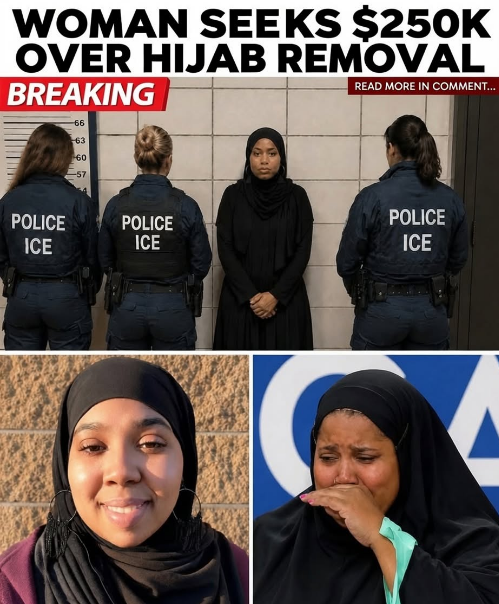
According to the complaint, the dispute centers not on the legality of the arrest itself but on what occurred after the arrest during the booking process. The plaintiff maintains that she repeatedly informed officers that her hijab is an important part of her Islamic faith and that removing it in front of male officers or allowing photographs without it to become publicly accessible conflicted with her religious obligations. She argues that reasonable accommodations should have been available without compromising legitimate law enforcement objectives.
The lawsuit alleges that police procedures failed to adequately respect her religious practices while carrying out routine identification requirements. The complaint seeks monetary damages as well as broader recognition that law enforcement agencies should adopt booking practices that protect both public safety and constitutionally protected religious expression whenever possible. As with all civil litigation, the allegations contained in the complaint remain claims made by the plaintiff unless established through legal proceedings or otherwise resolved.
Officials representing the City of Ferndale and its police department are expected to respond through the judicial process. At the time the lawsuit was filed, the allegations had not been tested in court, and no judge had ruled on the merits of the plaintiff’s claims. Civil lawsuits typically proceed through multiple stages, including responses from defendants, discovery of evidence, possible motions before trial, and, in some cases, settlement negotiations or a trial before a judge or jury.
The case has attracted attention because it touches upon broader questions that have emerged repeatedly across the United States regarding religious accommodations during police custody. Muslim women who wear the hijab often explain that the covering represents a deeply held religious obligation and that removing it in the presence of unrelated men may conflict with their religious beliefs. These concerns become particularly significant when government agencies exercise authority over individuals during arrest, detention, or identification procedures.
Supporters of the lawsuit argue that constitutional protections for religious freedom do not disappear when a person enters police custody. They contend that government agencies should make reasonable efforts to accommodate sincerely held religious beliefs whenever doing so does not interfere with legitimate security needs. Civil rights advocates point out that many correctional institutions and police agencies across the country have developed procedures allowing photographs to be taken by female officers or in private settings when practical.
Organizations advocating for religious liberty have frequently emphasized that accommodations for religious attire already exist in numerous areas of public life. Passports, driver’s licenses, and other official identification documents in many jurisdictions permit religious head coverings provided that facial features remain fully visible. Supporters argue that similar principles can often be applied during booking procedures without undermining accurate identification or institutional security.
Law enforcement officials, however, also emphasize that booking photographs serve important operational purposes. Mugshots are intended to provide accurate identification of individuals entering police custody and may later assist courts, correctional institutions, investigators, and other agencies involved in the criminal justice process. Police departments generally maintain that identification procedures must be sufficiently consistent to protect both public safety and the integrity of official records.
Many police agencies have attempted to balance these competing interests by developing policies that recognize both security requirements and religious accommodations. In some jurisdictions, religious head coverings may remain in place if they do not obscure facial features. In others, temporary removal may occur only under carefully controlled circumstances, such as in private rooms or in the presence of officers of the same gender whenever feasible. The availability of such accommodations often depends upon departmental policy, staffing, and the specific circumstances of each case.
Legal experts note that several constitutional and statutory principles may become relevant in cases involving religious accommodations. The First Amendment protects the free exercise of religion, while additional federal and state civil rights laws may also prohibit certain forms of religious discrimination by government entities. Courts examining these disputes generally consider whether government actions substantially burden religious exercise and whether any restrictions serve compelling governmental interests through the least restrictive means available, depending on the applicable legal framework.
The lawsuit also highlights the importance of departmental policies that provide clear guidance to officers encountering religious accommodation requests. Training experts frequently recommend that law enforcement agencies establish written procedures addressing common situations involving religious attire, dietary requirements, prayer accommodations, and other sincerely held beliefs. Clear policies may reduce uncertainty for officers while helping ensure that constitutional rights are respected consistently.
Community leaders have responded with varying perspectives. Some view the lawsuit as an opportunity to strengthen trust between law enforcement and religious communities by encouraging greater cultural awareness and procedural flexibility. Others stress that officers frequently make difficult decisions under time-sensitive circumstances and should not automatically be presumed to have acted unlawfully before all facts have been examined through the judicial process.
The case has also renewed broader discussion about public confidence in policing. Supporters of improved accommodation policies argue that respectful treatment during custody can strengthen community cooperation and reinforce confidence in the criminal justice system. They contend that individuals are more likely to trust public institutions when they believe their constitutional rights and religious identities will be treated with dignity regardless of the circumstances surrounding their
arrest.
At the same time, legal analysts caution against drawing broad conclusions before the evidence has been fully presented. Civil complaints describe one party’s allegations and are only the beginning of the judicial process. The defendants will have an opportunity to respond, present evidence, challenge factual claims, and explain the policies or circumstances surrounding the booking procedure. Ultimately, any determination regarding liability will rest with the court or with any negotiated resolution reached by the parties.
Beyond the specific legal questions raised in this lawsuit, the dispute reflects an ongoing national conversation about how democratic institutions should balance religious liberty, equal treatment, and public safety. Police departments increasingly serve communities representing diverse religious traditions and cultural practices. As those communities continue to grow, agencies across the country are regularly reviewing policies intended to protect constitutional rights while maintaining effective law enforcement operations.
The outcome of the Ferndale case may therefore be watched closely not only by the parties involved but also by civil rights organizations, law enforcement agencies, legal scholars, and policymakers nationwide. Whether the dispute ultimately results in a judicial ruling, a settlement, or policy changes, it underscores the continuing challenge of ensuring that government procedures remain both operationally effective and consistent with the constitutional protections that apply to every individual.