Political Firestorm Erupts After Alleged LeakedDocument Triggers Demands for Transparency
An alleged leaked document has sparked intense political debate, drawing widespread attention across social media and news platforms while raising fresh questions about government transparency and accountability. Critics argue that, if authentic, the material could warrant serious official scrutiny, while government representatives and independent observers caution that neither the document nor the claims surrounding it have been independently verified. As speculation spreads rapidly, the controversy has evolved into a broader discussion about public trust, the role of evidence in political debate, and the challenges democratic institutions face in responding to high-profile allegations.
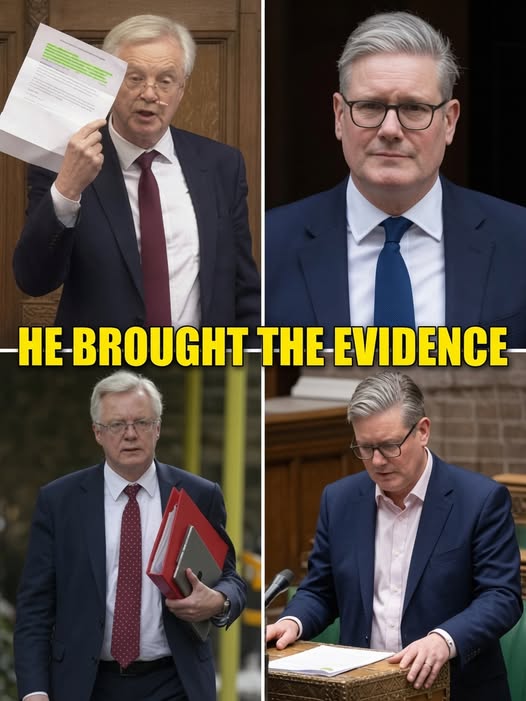
A rapidly developing political controversy has captured national attention following the circulation of what has been described online as a confidential government document. Within hours of its appearance, excerpts and screenshots were widely shared across social media, prompting intense discussion among politicians, journalists, and members of the public. Some commentators argued that the material, if verified, could raise significant questions regarding government decision-making and administrative oversight. Others urged restraint, emphasizing that the authenticity of the document and the conclusions being drawn from it remain uncertain. The competing interpretations have transformed the story into one of the most closely followed political developments of recent days.
The controversy demonstrates how quickly information can influence public discourse in the digital era. Viral posts often reach millions of people long before independent verification becomes possible, allowing speculation and commentary to spread alongside factual reporting. Analysts note that politically sensitive leaks frequently generate immediate public reaction because they touch directly on issues of leadership, transparency, and institutional trust. However, they also warn that early narratives can later change substantially once additional evidence becomes available. For that reason, many experts recommend distinguishing between verified facts, allegations, and personal opinion throughout the course of developing stories.
Opposition politicians have called for greater transparency and, where appropriate, an independent review of the claims associated with the alleged document. Several lawmakers stated that any credible allegations involving public administration deserve careful examination through established parliamentary and legal processes. They argued that a transparent investigation would help strengthen public confidence regardless of the eventual findings. Government officials, meanwhile, rejected suggestions that conclusions should be drawn before the material has been authenticated, emphasizing that responsible governance requires evidence rather than assumptions. This disagreement has become one of the central themes of the ongoing political debate.
Legal specialists caution that leaked documents often require detailed forensic analysis before investigators can determine their authenticity or significance. Experts may examine metadata, authorship, distribution history, and corroborating records to establish whether a document is genuine and whether it accurately reflects official decision-making. Even authentic documents can sometimes be misunderstood if presented without their full administrative or legal context. Consequently, legal analysts stress that isolated excerpts shared online should not automatically be treated as conclusive proof of wrongdoing. Such safeguards are intended to protect both accountability and faimess.
Constitutional scholars argue that democratic systems are designed to evaluate disputed claims through established institutions rather than public speculation alone. Parliamentary committees, ethics commissions, independent oversight bodies, and judicial mechanisms exist to examine allegations using evidence and testimony. Although these procedures often take time, they provide structured opportunities to determine facts objectively. Observers note that public confidence depends not only on whether allegations are investigated but also on whether those investigations
are perceived as impartial and transparent. Maintaining that balance remains essential during politically sensitive controversies.
The media has faced a difficult challenge while covering the unfolding story. News organizations have sought to verify the alleged leak through multiple independent sources while avoiding language that presents unconfirmed claims as established fact. Editors have increasingly emphasized what has been confirmed, what remains uncertain, and which questions investigators are still attempting to answer. This distinction reflects long-standing journalistic principles designed to preserve accuracy and public trust. Responsible reporting becomes particularly important when stories develop rapidly and attract widespread online attention.
Political communication experts suggest that the govemment’s response may prove nearly as significant as the allegations themselves. History shows that administrations often face criticism not only for the substance of controversies but also for how openly and effectively they communicate during periods of uncertainty. Prompt explanations, transparent procedures, and consistent messaging may help reduce speculation while official reviews proceed. Conversely, prolonged silence can encourage additional rumors and deepen public skepticism. These communication challenges have become increasingly important in the age of instant digital information.
Public reaction has reflected sharply different political perspectives. Supporters of the allegations argue that the reported material deserves thorough independent examination and greater disclosure from public authorities. Government supporters, on the other hand, caution that political reputations should not be shaped by documents whose authenticity has not yet been independently established. Many citizens occupy a middle ground, expressing support for both transparency and due process before reaching conclusions. This diversity of opinion illustrates the complexity of maintaining constructive public debate during periods of political uncertainty.
Social media has played a decisive role in accelerating the discussion. Algorithms often amplify emotionally engaging content, allowing dramatic headlines and selective excerpts to spread far more rapidly than detailed investigative reporting. Analysts warn that this dynamic can create strong public impressions before the underlying evidence has been fully assessed. As a result, both journalists and media literacy experts encourage audiences to consult multiple reliable sources rather than relying solely on viral posts. Such practices help reduce the risk of misunderstanding complex political developments.
Observers note that controversies of this nature often evolve over time as additional documentation, official statements, and independent investigations become available. Early assumptions sometimes prove accurate, while in other cases later evidence substantially changes the public understanding of events. For that reason, experienced political analysts recommend maintaining flexibility and allowing conclusions to develop alongside verified information. Democratic accountability depends not only on investigating serious allegations but also on ensuring that findings are grounded in credible evidence. That principle remains central to the current debate.
The broader significance of the controversy extends beyond the alleged document itself. It has reopened discussions about transparency, institutional oversight, the speed of digital information, and the responsibilities shared by govemments, journalists, and citizens alike. Regardless of how the investigation ultimately develops, the episode demonstrates how rapidly public trust can be tested when unverified claims attract widespread attention. As official responses continue and additional information emerges, observers across the political spectrum will be watching closely for independently verifiable evidence capable of clarifying the facts. Until then, the controversy remains an evolving story whose ultimate significance will depend not on speculation but on what future investigations are able to establish.