
Rupert Lowe’s Migration Speech Sparks Fresh Westminster Debate Over Borders, Security and Public Trust
A heated political debate has erupted in Westminster after Rupert Lowe delivered a strongly worded speech focusing on migration, public safety, and what he described as failures in Britain’s current approach to border control.
The remarks quickly attracted attention across the political spectrum, with supporters praising Lowe for raising concerns they believe have been ignored for too long, while critics accused him of using inflammatory language and presenting complex issues in overly simple terms.
The controversy highlights one of the most politically sensitive issues in modern Britain:
How should the country balance border control, public safety, economic needs, and humanitarian responsibilities?
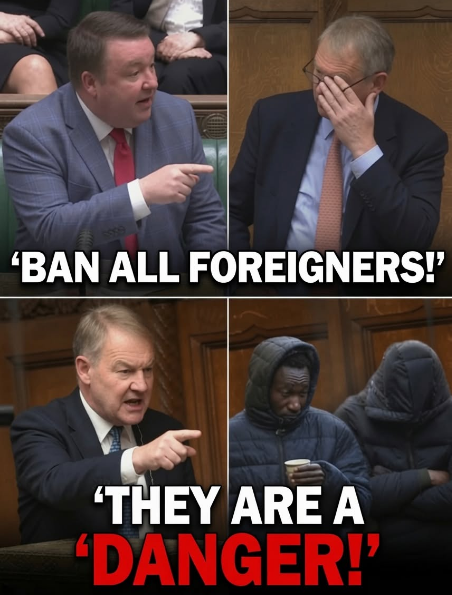
As migration remains one of the defining issues in British politics, Lowe’s intervention has once again pushed the debate into the national spotlight.
A Speech That Ignited Political Debate
Rupert Lowe has become known for his direct style of political communication.
Since entering national politics, he has positioned himself as a critic of what he describes as the failures of the political establishment, particularly on issues involving immigration, government accountability, and public services.
In his latest Westminster remarks, Lowe argued that concerns raised by many voters about migration and security have not received sufficient attention.
He questioned whether existing policies are effectively protecting communities and whether government institutions have been too slow to respond to public concerns.
Supporters interpreted the speech as a call for stronger action and greater accountability.
They argue that politicians should listen to citizens who worry about pressure on housing, healthcare, infrastructure, and public services.
Critics, however, argue that migration debates require careful analysis and that political rhetoric must avoid creating fear or unfairly associating migrants with crime or social problems.
Migration: One of Britain’s Most Divisive Issues
Few political topics in Britain generate stronger disagreement than immigration.
For decades, migration has shaped political campaigns, elections, and public discussions.
Supporters of higher levels of immigration often highlight benefits such as:
⚫ filling labour shortages,
⚫ supporting economic growth,
- contributing to public services,
⚫ and strengthening cultural diversity.
They argue that migrants who work, pay taxes, and contribute to society play an important role in Britain’s economy.
However, critics point to different concerns.
They argue that rapid population growth can place pressure on:
⚫ housing availability.
⚫ transport systems,
⚫ schools,
⚫ healthcare services,
⚫ and local infrastructure.
Some voters also express concerns about border control and whether governments have sufficient oversight of who enters the country.
These competing perspectives have created a political divide that successive governments have struggled to resolve.
The Question of Public Safety
A major theme of Lowe’s speech was public safety.
Supporters of his position argue that governments have a fundamental responsibility to protect citizens and ensure that immigration systems operate effectively.
They say that any failures involving illegal entry, criminal activity, or inadequate enforcement must be addressed openly.
They believe discussions about migration should not be dismissed simply because they are politically sensitive.
However, critics argue that public safety debates must be based on evidence rather than assumptions.
They point out that migrants are a diverse group and that individual responsibility should not be confused with broader discussions about migration policy.
The challenge for policymakers is addressing legitimate concerns while avoiding generalisations about entire communities.
The Debate Over Illegal Migration
One of the most controversial areas of British migration politics has been irregular migration, particularly small boat crossings in the English Channel.
Governments from different political parties have promised to reduce illegal crossings and strengthen border enforcement.
Supporters of tougher measures argue that uncontrolled migration undermines public confidence and makes it harder to manage legal immigration systems.
They argue that governments must clearly distinguish between legal migration routes and unlawful entry.
Critics respond that migration challenges require international cooperation and that asylum systems must also consider humanitarian obligations.
They argue that people fleeing conflict or persecution should have access to fair legal processes.
The disagreement reflects a broader tension between enforcement and humanitarian responsibility.
Rupert Lowe’s Political Message
Lowe’s approach reflects a wider trend among newer political movements that seek to challenge traditional parties.
His supporters often describe him as someone willing to discuss issues that mainstream politicians avoid.
They argue that many voters feel ignored when raising concerns about immigration, crime, and government effectiveness.
From this perspective, strong language is viewed as necessary to break through what they see as political caution.
However, opponents argue that political leaders must choose their words carefully.
They say that complex problems cannot always be solved through simple slogans and that public debate requires balance.
Why Supporters Say the Debate Matters
Those who support Lowe’s position believe Britain has avoided difficult conversations for too long.
They argue that concerns about migration should not automatically be labelled as hostile or
extreme.
According to this view, democratic societies must allow citizens to discuss:
- population changes,
⚫ national identity.
⚫ border policy,
⚫ and the impact of government decisions.
Supporters say that ignoring public concerns can damage trust in institutions.
They believe open debate allows governments to create better policies.
Why Critics Challenge His Approach
Critics of Lowe’s remarks argue that migration debates can become politically charged very quickly.
They warn that dramatic language may encourage division rather than practical solutions.
They argue that Britain’s migration system involves many different categories, including:
skilled workers,
international students,
refugees,
⚫ family migrants,
⚫ and people seeking asylum.
They say each category requires different policies and should not be treated as one single issue.
Critics also argue that political leaders should avoid creating the impression that migrants as a group represent a threat.
Instead, they believe debates should focus on specific policies and measurable outcomes.
The Role of Media and Social Platforms
The reaction to Lowe’s speech also demonstrates how modem political debates develop.
A parliamentary speech can now become a national conversation within hours.
Clips circulate online, supporters share messages, critics respond, and political arguments intensify quickly.
This has changed the way politicians communicate.
Strong statements often receive more attention than detailed policy discussions.
For politicians seeking influence, visibility has become increasingly important.
However, critics argue that viral politics can sometimes reward confrontation rather than careful debate.
Britain’s Search for a Migration Strategy
The debate surrounding Lowe’s speech reflects a broader challenge facing governments across Europe.
Countries are attempting to answer difficult questions:
How many migrants can a country realistically accommodate?
How should borders be controlled?
How can economies access workers while maintaining public confidence?
How should nations respond to humanitarian crises?
There are no simple answers.
Different countries have adopted different approaches, with varying levels of political support.
What remains clear is that migration will continue to be a central political issue.
A Divided Public Conversation
The reaction to Rupert Lowe’s comments demonstrates how divided opinions remain.
For some, the speech represented a necessary challenge to government policy.
They believe politicians must confront problems directly rather than avoid difficult subjects.
For others, the remarks represented a style of politics that increases tension without providing practical solutions.
They argue that responsible leadership requires careful language and evidence-based policymaking.
Both sides reflect genuine concerns about the future direction of Britain.
Conclusion: A Debate That Will Continue
Rupert Lowe’s Westminster speech has become another flashpoint in Britain’s ongoing migration debate.
Supporters see it as a powerful call for accountability, stronger borders, and greater attention to public concerns.
Critics see it as an example of how migration can become a political tool that oversimplifies complex challenges.
The wider debate is unlikely to disappear.
Migration remains connected to questions of economics, identity, security, and social cohesion.
As Britain continues to search for answers, one thing is clear:
The conversation over borders, migration, and public trust will remain one of the defining political debates of the years ahead.