Sharia Law, Street Protests and a Viral London Narrative: What We Know, What We Don’t, and Why the Debate Is Growing
Sharia Law, Street Protests and a Viral London Narrative: What We Know, What We Don’t, and Why the Debate Is Growing
Viral posts claim that Muslims took to London’s streets demanding Sharia law, provoking an enormous British counter-protest and throwing the capital into chaos. The images are dramatic and the language even more so. But separating what can actually be established from what social media claims reveals a much more complicated story about religion, British law, protest, immigration, misinformation and an increasingly polarised national debate.
A Dramatic Claim Spreads Across Social Media
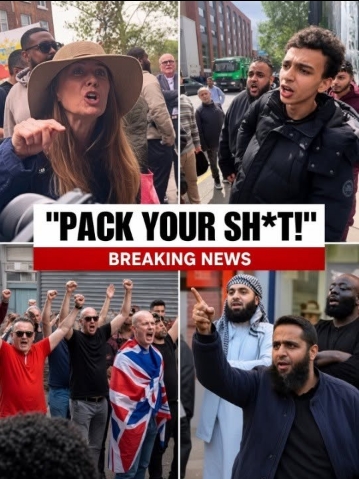
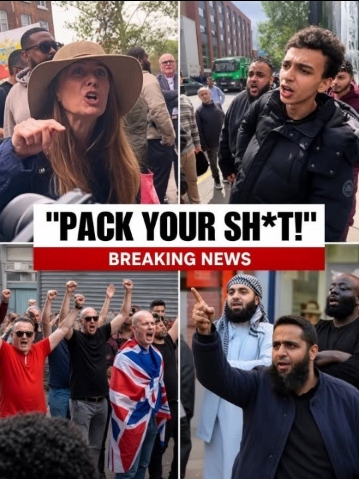
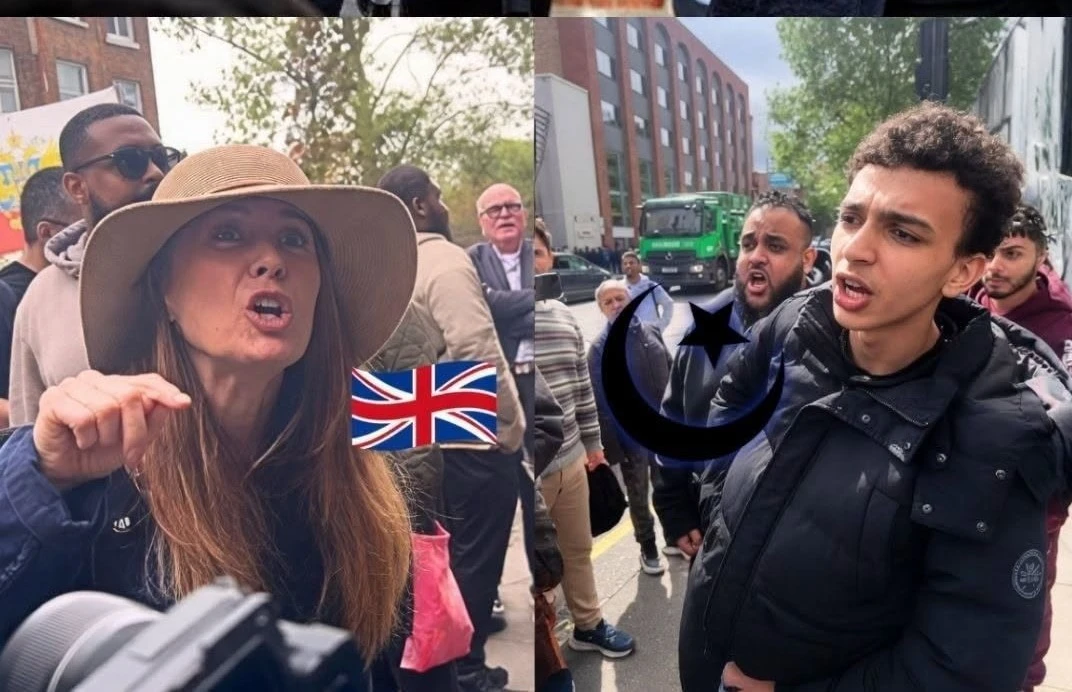
The story arrives in the familiar language of an online political emergency: Muslims have supposedly demanded that Sharia law be introduced in Britain, ordinary Britons have responded by flooding London’s streets, and the confrontation has allegedly left authorities facing a rapidly escalating security crisis. Accompanying images show Muslim demonstrators on one side, people carrying Union Jack flags on another, confrontations in crowded streets and provocative captions suggesting that two fundamentally incompatible visions of Britain are colliding in public. It is exactly the sort of material capable of travelling rapidly across Facebook, X, TikTok and other platforms because it combines several of the most emotionally charged issues in contemporary British politics: immigration, Islam, national identity, freedom of religion, public order and the future of multiculturalism.
There is, however, an immediate problem with presenting the viral narrative as established news. At the time of writing, reliable evidence has not been identified that substantiates the sweeping claim that a large Muslim movement recently took over London streets to demand the replacement of British law with Sharia, followed by a spontaneous mass uprising by Londoners specifically in response. That distinction matters enormously. Britain certainly experiences demonstrations involving Muslim organisations, pro-Palestinian groups, religious gatherings, nationalist organisations, anti-immigration movements and counter-protesters. London has also witnessed very large demonstrations involving competing political visions. None of those facts, however, automatically verifies the specific cause-and-effect story being circulated online.
Recent fact-checking provides an additional reason for caution. Full Fact has documented several false or misleading pieces of viral content portraying Muslims in London. In June 2026 it examined a video supposedly showing huge crowds shutting down London to demand halal standards and concluded that the footage had been generated using artificial intelligence. Earlier in April, it investigated videos supposedly showing enormous Muslim crowds praying in London roads and similarly found that the clips were AI-generated.
That does not prove that every photograph, protest video or claim involving Muslims in London is false. It does demonstrate why dramatic social-media material should not be treated as evidence without establishing where and when it was recorded, who organised the event, what participants actually demanded and whether the images accompanying a post depict the same event described in its caption.
The central question, therefore, is not simply whether Britain is debating Islam or Sharia. It plainly is. The more important question is whether the specific viral account accurately describes a recent confrontation—or whether genuine political anxieties, unrelated demonstrations, old photographs and potentially misleading captions have been assembled into a much larger narrative.
What Does “Sharia Law” Actually Mean?
Much of the argument becomes confused because the phrase “Sharia law” can mean very different things to different speakers.
Sharia is broadly a body of Islamic religious principles derived from sources including the Quran and traditions associated with the Prophet Muhammad. For practicing Muslims it can concern personal morality, worship, charitable obligations, marriage, inheritance, finance, dietary practices and many other aspects of life.
For some critics in Europe, however, “Sharia law” evokes something much narrower and more alarming: the idea of an alternative state legal system operating independently of—or superior to—the democratic law of the country.
Those two meanings should not be casually conflated.
A Muslim choosing food according to halal requirements, arranging an Islamic marriage ceremony or seeking religious advice about divorce is not equivalent to a government transferring criminal or constitutional authority to a religious institution. Similar distinctions exist in other faiths, where believers may voluntarily follow religious teachings without those teachings becoming national legislation.
This is especially important in the British context because religious advisory bodies do exist.
So-called Sharia councils have operated in England for decades. They most commonly address religious questions surrounding marriage and divorce and may provide guidance to Muslims seeking a religious resolution alongside the requirements of civil law.
But they are not an alternative sovereign court system.
A government-commissioned review published in 2018 described such councils as having no legal status and no legally binding authority under civil law. Estimates at that time suggested there could be approximately 30 to 85 councils in England and Wales, although the absence of an official register makes an exact contemporary figure difficult to establish.
That legal distinction is fundamental to understanding the controversy.
Does Sharia Override British Law?
No.
Whatever private religious rules an individual chooses to follow, Parliament, the courts and established UK legal institutions determine enforceable law.
The government has repeatedly stated that Sharia does not form part of the law of England and Wales. Religious councils cannot overturn an Act of Parliament, replace criminal courts, exempt individuals from criminal law or compel British citizens to accept their judgments simply because those judgments are religiously based.
This does not mean that controversy surrounding Sharia councils is imaginary.
Critics have raised serious questions over women’s rights, divorce, social pressure and whether vulnerable individuals may mistakenly believe religious decisions have legal force. Supporters respond that voluntary religious mediation is part of freedom of religion and can provide culturally meaningful assistance to believers, provided everyone understands that civil law remains supreme.
That is a legitimate policy debate.
It is considerably different, however, from claiming that Britain has surrendered portions of its territory to Islamic law.
Claims about Muslim “no-go zones” or areas outside British legal authority have circulated internationally for years. Fact-checking organisations and police statements have repeatedly found no evidence that neighbourhoods exist in Britain where national law simply does not apply.
What About Muslims Who Actually Want Sharia?
Another mistake would be to move to the opposite extreme and pretend that nobody in Britain supports a greater role for Islamic law.
There clearly are people who do.
Religious and political views among British Muslims are diverse, ranging from strongly secular interpretations of citizenship to conservative religious positions. Polling cited by Full Fact found that a 2024 J.L. Partners survey reported 32 percent of British Muslims surveyed considered implementation of Sharia law in Britain within the next 20 years “very” or “somewhat” desirable. The same survey reportedly found 9 percent support among the general population.
Those figures deserve discussion, but also careful interpretation.
A survey question using the broad phrase “Sharia law” does not necessarily establish what every respondent believes that would entail. One person may understand it as religious family guidance; another may envision Islamic finance; another could indeed support a much more extensive religious legal order.
Polling cannot therefore be transformed automatically into the claim that one-third of British Muslims want the British constitutional system abolished.
Equally, dismissing such polling entirely would prevent a serious conversation about integration and competing understandings of law.
The democratic response should be to ask precisely what people believe, which legal changes they support and whether those proposals are compatible with constitutional rights.
One Country, One Enforceable Law
On the constitutional principle itself, the situation is far less ambiguous than social-media arguments often suggest.
British citizens can practice Islam, Christianity, Judaism, Hinduism, Sikhism or another religion. They can also reject religion altogether.
They can advocate changes to the law.
They can campaign for policies inspired by religious beliefs.
They can protest against existing legislation.
They can even argue peacefully for constitutional ideas that most other citizens consider deeply undesirable.
But until Parliament changes a law through the democratic process, existing law remains enforceable.
And religious affiliation does not provide immunity from it.
This principle protects Muslims just as much as it protects non-Muslims.
If a future local majority attempted to impose Christian religious rules upon Muslim residents outside the democratic legal framework, the same constitutional objection would apply. If a private Islamic organisation attempted to impose rules on unwilling non-Muslims, it would similarly have no authority to supersede British law.
Equal citizenship depends precisely on that consistency.
Why Street Demonstrations Can Be Misleading
The image accompanying a viral post can appear to tell a complete story when it actually tells almost none.
A photograph may establish that people gathered somewhere.
It usually does not establish why.
A person wearing Islamic clothing and speaking through a microphone might be attending a religious procession, a Palestine demonstration, a community event, a political protest or something entirely unrelated to Sharia.
Likewise, a crowd carrying Union Jacks could belong to a veterans’ event, an anti-immigration demonstration, a football celebration or a nationalist rally.
Context determines meaning.
London recently hosted the annual Arbaeen procession, for example. Organisers advertised the 46th Arbaeen UK Procession for 9 August 2026 at Marble Arch, describing it as a peaceful religious gathering commemorating Hussain ibn Ali. That is plainly a Muslim street gathering, but its existence cannot legitimately be presented as evidence that participants were marching to impose Sharia on Britain unless evidence demonstrates that they actually made such a demand.
This illustrates the wider problem.
Real photographs can support false stories.
A photograph does not need to be artificially generated to become misinformation. An authentic picture from Event A can simply be captioned as Event B.
Britain’s Large Nationalist Demonstrations
The other half of the viral narrative—the sight of enormous crowds carrying British flags—is also rooted in genuine events.
London has experienced major nationalist and anti-establishment demonstrations, including the “Unite the Kingdom” movement associated with activist Tommy Robinson, whose real name is Stephen Yaxley-Lennon.
One large September 2025 event produced substantial disagreement about attendance. Claims circulated online that police had estimated three million participants. Full Fact found that claim to be false; the Metropolitan Police estimate was between approximately 110,000 and 150,000.
That is still an extremely large demonstration.
But the difference between 110,000–150,000 and three million demonstrates how quickly crowd sizes become political weapons.
Similar problems continued in 2026. Footage from the September 2025 demonstration was later recirculated as though it showed another protest taking place in May 2026. Fact-checkers established that the older demonstration had crossed Westminster Bridge while the later event followed a different route.
Again, the footage itself was real.
The caption was the problem.
Consequently, a video showing tens of thousands of British-flag-carrying demonstrators cannot by itself prove that those people entered London specifically because Muslims had just demanded Sharia law.
The Rise of AI “Ragebait”
There is another development making verification considerably harder in 2026: convincing synthetic video.
Artificial intelligence has dramatically lowered the cost of producing apparently authentic footage of demonstrations, speeches, street confrontations and political statements.
The technology has become particularly effective when combined with emotionally charged themes.
Immigration.
Religion.
Crime.
National identity.
War.
Race.
All produce strong reactions and therefore engagement.
Fact-checkers have described a pattern of AI-generated material involving Muslims and Britain apparently designed as “ragebait”—content intended primarily to provoke anger and encourage users to share before checking whether the event occurred.
The June 2026 fake London halal demonstration is a particularly revealing example. According to Full Fact, the video contained Google’s SynthID watermark in both its visuals and audio, alongside distorted faces and garbled text typical of synthetic generation. Nevertheless, hundreds of commenters apparently responded as though they were watching a genuine demonstration.
Other false material has followed similar themes.
Full Fact’s recent religion investigations include fake footage of Muslims praying inside a London Underground carriage, fake crowds praying in London roads, an AI-generated video purporting to show Muslim women demanding restrictions on dogs at Brighton beach, and a false claim that the Mayor of Rotherham called for Sharia law in Britain.
The pattern should concern people across the political spectrum.
Someone can support stricter immigration controls and still be deceived by an AI video.
Someone can strongly support multiculturalism and still be deceived by manipulated footage attacking nationalist protesters.
Verification is not an ideological position.
Why the Story Feels Believable to Many Britons
False or exaggerated stories rarely become successful simply because somebody created them.
They succeed because they attach themselves to existing anxieties.
Britain has undergone rapid demographic and cultural change. Immigration remains one of the country’s most politically divisive issues. The number of asylum seekers arriving in small boats has produced repeated confrontations between governments, campaigners, courts and opposition parties. Debates over integration have expanded beyond migration statistics to include language, religious expression, national identity and whether multiculturalism has produced sufficient social cohesion.
Against that background, a headline saying “Muslims demand Sharia law” does not arrive in an emotional vacuum.
For some readers, it appears to confirm something they already fear.
For others, the headline itself becomes evidence of anti-Muslim prejudice.
Social media then rewards both reactions.
Anger creates comments.
Comments increase distribution.
Distribution generates additional anger.
Before long, the debate may have millions of impressions even when the original factual proposition remains uncertain.
The Integration Question
Behind the sensationalism sits a serious political question Britain cannot simply fact-check away.
What does successful integration require?
One model says integration means accepting British law while retaining substantial cultural and religious independence.
Another argues that legal obedience is insufficient and immigrants should also adopt a stronger shared national culture.
A third places emphasis on civic participation, language proficiency and democratic values while rejecting demands for cultural assimilation.
These differences matter because “integration” is often used politically without a shared definition.
Most people would presumably agree that every resident must obey criminal law.
But should newcomers be expected to adopt British social attitudes?
Which attitudes qualify as “British”?
Can communities maintain conservative beliefs about marriage or gender while remaining successfully integrated?
At what point does private religious autonomy become social segregation?
Those questions are far more difficult than a viral meme makes them appear.
Religious Freedom Has Limits—and Protections
Britain’s democratic order simultaneously protects freedom of religion and limits what can be imposed in religion’s name.
A Muslim may believe Islamic teaching represents the ideal moral system.
A Christian may believe biblical teaching should guide society.
An atheist may reject both.
The state does not need to decide whose theology is correct.
Its responsibility is to preserve the legal rights of citizens.
That means religious belief cannot justify violence, coercion or unlawful discrimination.
But it also means hostility toward a religion does not justify stripping peaceful believers of ordinary civil liberties.
The challenge is applying the same standard consistently.
A democracy proves its commitment to freedom not by protecting popular speech but by protecting lawful speech that other citizens may strongly dislike.
Could Someone Legally Demonstrate for Sharia?
This produces an uncomfortable but important constitutional point.
If a group genuinely organised a peaceful demonstration calling for Britain to adopt some form of Sharia-based legislation, the fact that many Britons found the proposal objectionable would not necessarily make the demonstration illegal.
People in democratic countries regularly campaign for radical constitutional change.
Communists may advocate nationalising private industries.
Republicans may campaign to abolish the monarchy.
Religious conservatives may seek legislation based on moral beliefs.
Separatists may campaign for independence.
Citizens opposed to those movements can organise against them.
The boundary is generally crossed where advocacy becomes criminal conduct—for example, threats, incitement to violence, terrorism-related offences or other unlawful behaviour.
Britain has also strengthened police powers concerning certain intimidatory protests, including demonstrations near places of worship.
The principle remains significant: opposing an idea and prohibiting people from peacefully expressing it are different questions.
The Same Rule Applies to Counter-Protesters
British citizens who oppose Sharia-based legislation have the same democratic right to organise peacefully.
They may campaign for secular law.
They may demand stricter immigration rules.
They may criticise Islam.
They may argue that multiculturalism has failed.
They may wave the Union Jack and declare their attachment to British national identity.
Those activities are not inherently extremist.
But exactly the same legal boundaries apply.
Political frustration does not legitimise violence against Muslims, attacks on mosques or collective punishment of people based on religion.
That distinction becomes especially important when online rhetoric transforms a political disagreement into language suggesting that millions of citizens constitute an enemy population.
Britain’s Muslims are not a single political organisation.
Neither are Britain’s Christians, atheists, immigrants or people who vote for a particular party.
The Danger of Collective Blame
The phrase “Muslims demand Sharia law” contains another journalistic problem: the subject is enormous.
There were roughly four million Muslims in England and Wales according to the 2021 census.
What would it mean to say “Muslims” demanded something?
Ten protesters?
One organisation?
A preacher?
A survey majority?
Every Muslim citizen?
Journalistically, those are radically different propositions.
If 200 environmental activists demand an immediate ban on petrol cars, a responsible headline would not normally say “Britons demand petrol cars banned.”
The same standard should apply to religious communities.
Where identifiable activists make a controversial demand, they can and should be quoted accurately.
But their position should not automatically be attributed to millions of people who never expressed it.
Concerns About Parallel Communities Should Still Be Discussed
Rejecting collective blame does not require pretending that integration problems do not exist.
Britain has repeatedly debated segregation, forced marriage, religious extremism, women’s rights, educational standards and the influence of conservative religious leadership.
Some Muslim reformers themselves have been among the strongest critics of practices inside their communities.
This is important because criticism of a religious practice is not automatically hostility toward the people who follow that religion.
A liberal democracy must be capable of discussing difficult issues.
The standard should be evidence.
If a religious organisation pressures women to remain in abusive marriages, investigate it.
If an extremist preacher encourages criminal violence, prosecute offences where the legal threshold is met.
If a council violates equality legislation, challenge the policy.
If immigrants commit crimes, prosecute the individuals responsible.
But evidence against individuals cannot simply become guilt assigned to an entire population.
Why London’s Identity Has Become Symbolic
London occupies an unusual place in these arguments because it functions simultaneously as Britain’s capital and one of the world’s most multicultural cities.
For supporters of diversity, London demonstrates how people from hundreds of cultural backgrounds can live, work and build businesses together.
For critics, the speed of demographic change raises questions about whether a shared national identity can survive without stronger integration.
Both perceptions influence how photographs of the city are interpreted.
A picture of a mosque can be viewed as evidence of religious freedom.
Someone else may see the same image as evidence of cultural displacement.
A street filled with Union Jacks can represent patriotic solidarity to one observer and aggressive nationalism to another.
Images therefore acquire meanings far beyond the event they depict.
Donald Trump and the International Sharia Debate
The argument has also crossed Britain’s borders.
In September 2025, US President Donald Trump told the United Nations General Assembly while discussing London that “they want to go to Sharia law.” The precise meaning of “they” was unclear.
Full Fact subsequently examined the assertion and found no evidence that Mayor Sadiq Khan or London as a city was attempting to introduce Sharia law. It also noted the government’s position that Sharia has no legal authority over English and Welsh civil law.
The episode illustrates how London has become an international symbol in wider arguments over immigration and multiculturalism.
For politicians sceptical of European migration policy, London is sometimes presented as a warning.
For defenders of multicultural Britain, those descriptions can appear to be caricatures that ignore the city’s economic success and everyday coexistence.
Reality is more complicated than either political image.
What the Viral Image Cannot Tell Us
The collage circulating with the current claim appears designed to produce an immediate emotional conclusion.
There are angry faces.
British flags.
Islamic imagery.
Crowds.
Confrontation.
A giant arrow.
And inflammatory wording.
But none of those visual devices establishes chronology.
They do not establish that the people shown were participating in the same event.
They do not establish what anyone said before the photograph was taken.
They do not prove that Muslim demonstrators demanded national implementation of Sharia.
And they do not prove that the British-flag crowd assembled specifically because of such a demand.
A photograph is evidence of what was visible within the frame.
A caption is a claim about what that evidence means.
Those are not the same thing.
What Would Be Needed to Verify the Claim?
A strong news report would need several pieces of evidence.
First, the alleged Muslim demonstration would need to be identified by date, location and organiser.
Second, original video or reliable reporting would need to establish what speakers actually demanded.
Third, police information could establish crowd numbers, arrests, road closures and security measures.
Fourth, organisers of any subsequent counter-demonstration would need to explain why their event was called.
Finally, timestamps and geolocation would be needed to establish whether photographs circulating online actually corresponded to those events.
Without those elements, statements such as “Brits stormed the streets after Muslims demanded Sharia” remain assertions rather than established chronology.
The Public-Order Dimension
If rival demonstrations do meet, authorities face a difficult balancing act.
Police have an obligation to facilitate lawful protest while preventing violence.
Large demonstrations can require road closures, separation zones and substantial numbers of officers.
The presence of police barriers or riot equipment can subsequently be portrayed online as proof that a city was “in chaos,” even where most participants behaved peacefully.
Conversely, officials should not minimise genuine disorder when it occurs.
If protesters attack police officers, damage property or assault opponents, those incidents deserve accurate reporting regardless of the political affiliation of the perpetrators.
The most useful measures are therefore specific ones:
How many arrests occurred?
How many people were injured?
What offences were alleged?
How many officers were deployed?
Which streets were closed?
How long did disruption last?
“London erupts” is a powerful headline.
Numbers usually tell readers much more.
Britain’s Deeper Argument Is Not Going Away
Even if the most dramatic version of this particular viral story cannot be substantiated, the underlying argument will continue.
Britain is debating how much immigration it wants.
It is debating what newcomers should be expected to adopt.
It is debating the limits of multiculturalism.
It is debating Islam’s place within a historically Christian but increasingly secular society.
It is debating how far religious organisations should participate in family mediation.
It is debating free speech and extremism.
And it is debating what British identity should mean in the twenty-first century.
Those questions cannot be resolved by pretending public concern does not exist.
Nor can they be resolved by viral misinformation.
The Principle Both Sides Often Forget
There is a surprisingly simple constitutional principle beneath the controversy.
British law applies to everyone.
That means a Muslim resident cannot demand exemption from criminal law merely because a religious rule says something different.
But it also means a nationalist protester cannot deny another citizen legal rights simply because that citizen is Muslim.
Equality before the law works in both directions.
The principle is powerful precisely because it does not require the state to determine which community deserves greater protection.
Citizens receive the same protection.
Citizens carry the same responsibilities.
A Test for Britain’s Democratic Confidence
The Sharia debate ultimately tests something larger than Britain’s relationship with Islam.
It tests whether the country remains confident enough in its democratic institutions to manage profound disagreement without turning political opponents into enemies.
A confident democracy can allow a religious conservative to argue for religiously inspired legislation and allow a secular citizen to reject it.
It can permit nationalist demonstrations and Muslim religious processions.
It can investigate extremism without treating ordinary believers as extremists.
It can defend minorities without pretending that minority organisations are beyond criticism.
And it can insist that no religious or political movement stands above the law.
That balance is difficult.
But abandoning it in either direction would create a far more serious problem than an offensive demonstration.
Social Media’s Incentive Is the Opposite of Journalism’s
Journalism asks: What happened?
Social media often asks: What will make people react?
Those objectives increasingly collide.
A headline reading “Small group makes controversial statement while circumstances remain unclear” will struggle against one announcing that an entire religion has risen against Britain.
Likewise, a peaceful demonstration receiving a few hundred participants is less commercially attractive than claims of millions occupying London.
The exaggeration is not accidental.
Attention has economic value.
Political anger has become a product.
Readers Have More Power Than They Think
The public cannot eliminate misinformation, but individual users can dramatically reduce its reach.
Before sharing a dramatic demonstration video, viewers can search for reporting from multiple independent organisations.
They can look for the original uploader.
They can check whether signs contain distorted AI-generated lettering.
They can compare landmarks.
They can search whether police acknowledged the event.
They can ask whether a photograph has appeared online years earlier.
Most importantly, they can resist the psychological pressure created by captions demanding immediate outrage.
The more perfectly a post confirms someone’s political beliefs, the stronger the reason to verify it.
That principle applies to everybody.
What Can Be Said With Confidence
Several facts surrounding the wider controversy can be established.
Britain has Muslim religious councils commonly described as Sharia councils.
They do not constitute a parallel state judiciary and cannot override British civil or criminal law.
Some British Muslims do favour a greater role for Sharia, although exactly what individual respondents mean by that term varies and should not automatically be interpreted as support for replacing the entire British legal system.
London has experienced extremely large nationalist demonstrations, including events attracting well over 100,000 people according to police estimates.
It also regularly hosts Muslim religious and political gatherings.
And false or misleading social-media material has repeatedly attempted to connect Muslims, London and supposed demands for religious transformation, including AI-generated footage presented as genuine street demonstrations.
What has not been established by the evidence reviewed for this report is the viral narrative’s central dramatic sequence: that a major Muslim mobilisation recently demanded Sharia law across Britain and that masses of Britons subsequently stormed London’s streets specifically in direct response.
Unless additional verifiable evidence emerges, that claim should therefore be treated as unconfirmed, not reported as fact.
The Bigger Story Behind the Headline
Perhaps that makes the real story more significant rather than less.
Britain does not need an invented confrontation to demonstrate that profound disagreements exist over immigration, integration, religion and national identity. Those disagreements are already visible in elections, opinion polls, Parliament, demonstrations and everyday political debate.
The challenge is deciding how the country conducts that argument.
One path turns every Muslim gathering into evidence of an Islamic takeover and every British flag into evidence of extremism.
Another path refuses to acknowledge any legitimate concern about integration, religious conservatism or social cohesion.
Neither provides an adequate description of modern Britain.
A more durable democratic position is simultaneously more demanding and less dramatic: verify claims, judge individuals by their conduct, permit peaceful disagreement, challenge genuinely illiberal ideas, protect religious freedom and maintain one enforceable legal framework for everyone.
Britons are entitled to debate whether their immigration system has worked.
Muslims are entitled to practice their religion.
Critics are entitled to oppose religious influence over public policy.
Religious citizens are entitled to advocate political change.
Protesters are entitled to demonstrate peacefully.
And nobody—whether a religious leader, political activist, government official or viral social-media personality—is entitled to invent facts.
That may not produce the explosive simplicity of the claim that Britain and Sharia have suddenly collided on the streets of London.
But it comes considerably closer to describing the real argument now confronting the country.
And that argument—over law, belonging, integration and the meaning of British identity—is unlikely to disappear anytime soon.