WHAT HAPPENS WHEN 2% OF IRELAND SAYS “ENOUGH”? THE NUMBER SHAKING THE GOVERNMENT Ireland is facing a growing wave of protests as thousands of people take to the streets and pressure builds across the country. What began as demonstrations has increasingly become a broader confrontation between protesters and the political establishment. Truckers, fishermen and other groups are reportedly joining the pressure campaign, with road blockades and disruptions threatening to spread beyond individual cities and into critical parts of the economy. Meanwhile, footage circulating online is fueling an intense argument over what is really happening on the ground. Supporters say the demonstrations reflect deep frustration among ordinary workers, while opponents argue that the movement risks creating chaos and unnecessary disruption. Now attention is turning to one mysterious figure: 2%. Why has this number become so important? Could a relatively small percentage of the population participating in sustained protests create enough political pressure to trigger a government crisis? The answer may depend not only on how many people take to the streets, but on how long the movement can maintain momentum—and whether public opinion begins shifting behind it. The 2% question could be far more important than it first appears.
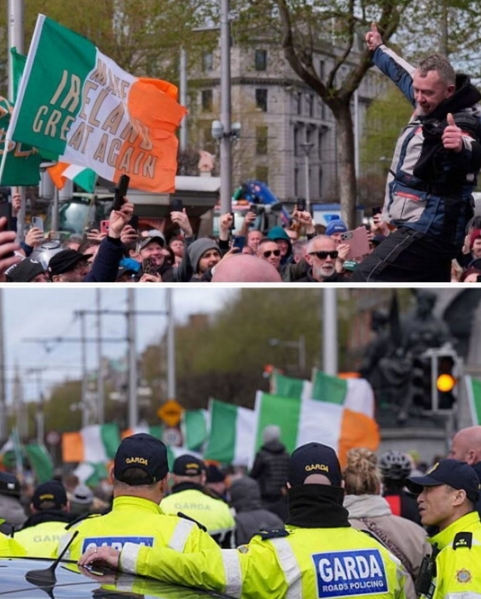
Is this the end of the Irish government?
Ireland is bracing for an unprecedented day of civil action as a nationwide fuel protest enters its fifth day, with organizers promising the largest demonstrations yet and calling for hundreds of thousands to descend on the capital.
Tensions have escalated sharply following four days of blockades that have caused significant disruption, leading to reports that the Gardaí and military are set to be deployed.
Protesters, a coalition of truckers, farmers, and working-class citizens, vow to “get their country back” in a direct challenge to the government’s authority.
In dramatic scenes from Day Four in Wicklow, a line of ten fuel tankers required a full Garda escort to move, surrounded by crowds of protesters who brought traffic to a standstill.
Chants and confrontations marked the tense standoff, with participants accusing the government of ignoring citizens in favor of corruption and misplaced priorities.
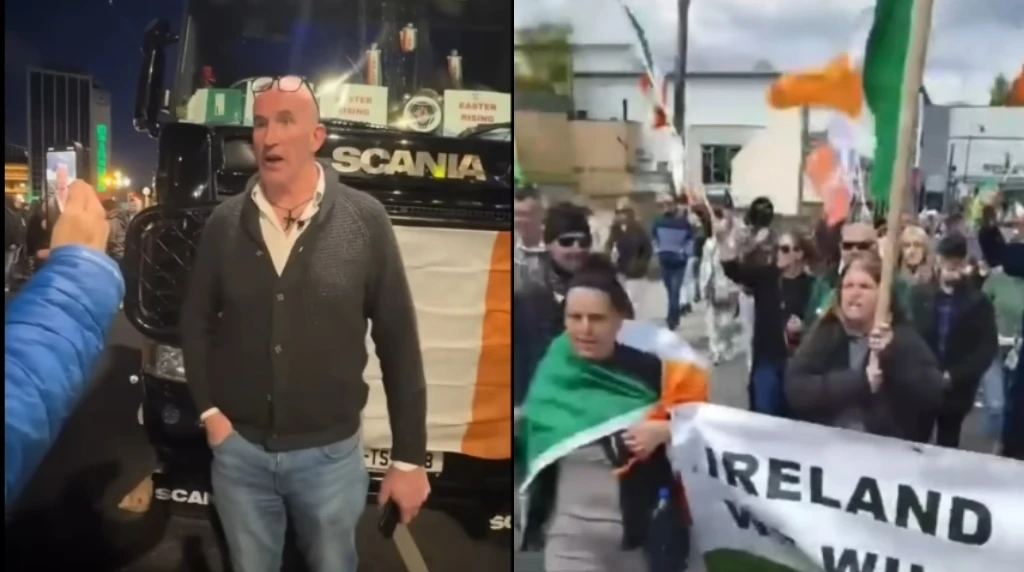
A fiery speech captured ahead of today’s planned actions has circulated widely, rallying participants with a call for maximum turnout. “We need half the country here,” the speaker declared, urging bus drivers, nurses, construction workers, and all citizens to converge.

The rhetoric frames the day as a historic showdown, with the speaker asserting, “The people have the power,” and placing the onus squarely on the government to respond to the popular uprising.
Organizers have explicitly called for a mass march on Leinster House, the seat of the Irish parliament, with a key figure stating that between 150,000 to 200,000 people—merely 1.5 to 2 percent of the voting population—could force the government’s dissolution.
This direct appeal for regime change marks a significant radicalization of the protests’ demands, moving beyond fuel prices to a fundamental political crisis.
Further escalating the stakes, supporters have called for fishermen to blockade every port and river once weather conditions improve, aiming to sever maritime trade. This proposed economic stranglehold, coupled with the ongoing fuel and road blockades, threatens to paralyze the nation’s supply chains and intensify pressure on the administration.
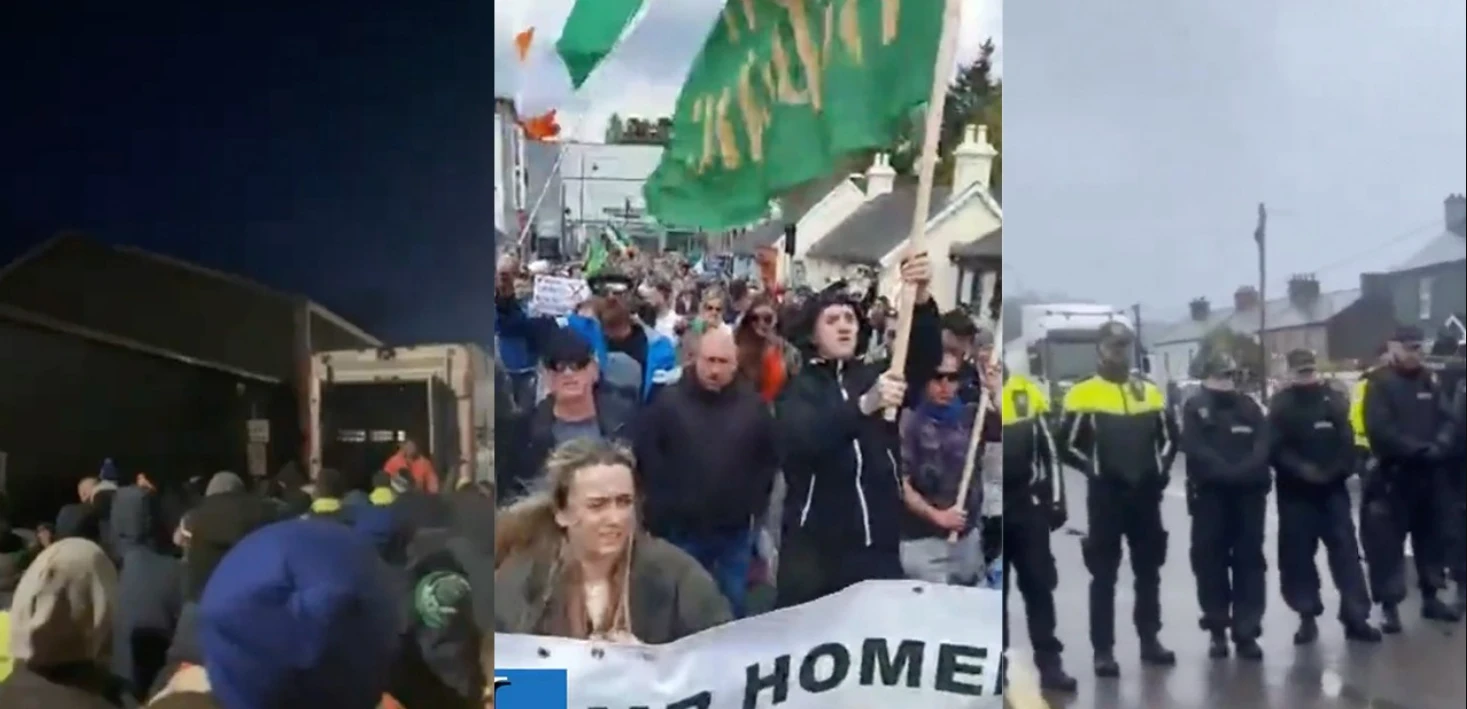
The state’s response is now a critical focal point. While official media reports suggest police are retaking control, footage from the ground and protester accounts claim the Gardaí have lost control of several areas.
The potential deployment of the military, a measure not seen in over a century, hangs over the day’s events, with one protest supporter warning that such a move would echo the conflicts of 110 years ago.
Legacy media outlets have been accused by protest channels of framing demonstrators as thugs, a characterization fiercely rejected by organizers who point to video evidence of ordinary, frustrated citizens.
The movement portrays itself as a peaceful, necessary uprising of the working class against a “tyrannical government.”
As the country awaits what protesters term “the biggest set of protests,” the atmosphere is one of palpable anticipation and defiance. The coming hours will test the resilience of both the protest movement and the state’s institutions, with the potential to redefine Irish politics.
The world watches to see if today will indeed become a historic turning point, as the Irish people mobilize in an extraordinary display of collective action aimed at reclaiming their national destiny.