

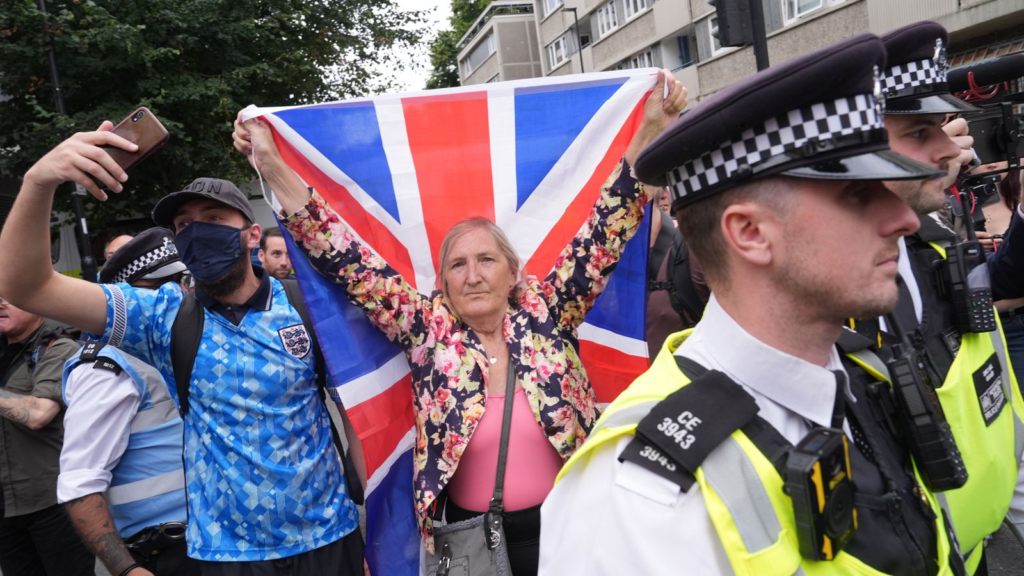
Fresh scrutiny has fallen on the police response to the death of Henry Novak after Britain’s police watchdog confirmed it is examining whether previous policing operations surrounding migrant hotel protests may have influenced officers’ actions on the day of the fatal incident.
The inquiry, led by the Independent Office for Police Conduct (IOPC), is not determining guilt or innocence. Instead, investigators are seeking to establish whether the wider operational environment, including months of protests and counter-protests near an asylum hotel, affected the judgments made by officers when they first arrived at the scene.
The case has attracted national attention following the release of body-camera footage showing Henry Novak telling officers that he had been stabbed. During the same encounter, another man claimed he had been the victim of a racist attack, prompting officers to begin questioning those involved while attempting to establish exactly what had happened.

Critics argue that the footage raises difficult questions about whether officers fully appreciated the seriousness of Novak’s injuries during those crucial first moments. Supporters of the officers, however, caution that emergency responders are often required to make rapid decisions in confusing and highly stressful situations based on the information available at the time.
The IOPC has not suggested that officers deliberately acted improperly. Instead, its investigation will examine whether previous operational briefings or the policing climate surrounding local demonstrations may have unintentionally influenced decision-making.
Former police and security figures have suggested the investigation touches on a much broader debate about modern policing in Britain.
Some argue that over the past two decades, police forces have taken on increasingly complex responsibilities beyond traditional crime prevention. Officers are now expected to balance criminal investigations with safeguarding responsibilities, community relations, equality guidance, and human rights obligations. Supporters say these developments have improved accountability and public confidence. Critics believe they can also make frontline decision-making more complicated during fast-moving emergencies.
Former security expert Henry Bolton has argued that successive policing reforms have fundamentally changed the way officers operate, placing greater emphasis on consultation with local authorities, community organizations, and advocacy groups. According to Bolton, the investigation should examine whether those wider institutional changes have affected operational independence.
Others disagree with that interpretation.
Commentators defending the current policing framework argue that isolated operational failures should not be used to draw sweeping conclusions about the entire police service. They stress that the overwhelming majority of officers continue to perform difficult duties professionally and that any conclusions should be based on the findings of the independent investigation rather than public speculation.
The debate has also expanded into wider questions about police priorities.
Some commentators believe the footage suggests officers devoted too much attention to allegations of offensive language before fully assessing Novak’s medical condition. Others respond that officers have a legal obligation to investigate all allegations made at the scene while simultaneously ensuring public safety, and that body-camera footage often captures only part of a rapidly evolving incident.
The discussion has become increasingly political, with some critics arguing that modern policing has become too focused on managing social issues, while others insist that community confidence and equal treatment remain essential parts of effective law enforcement.
Despite the disagreement, there appears to be broad consensus on one point: if mistakes were made during the response to Henry Novak, they must be fully examined so that similar incidents can be prevented in the future.
The IOPC has confirmed that its investigation remains ongoing. It is reviewing body-worn camera footage, officer statements, dispatch records, and other evidence to establish exactly how decisions were made during the incident. The officers involved are currently being treated as witnesses while the investigation continues.
In a statement, the watchdog expressed its sympathies to Henry Novak’s family and reaffirmed its commitment to conducting an independent investigation into police contact with Novak before his death, including the first aid provided and the use of handcuffs during the encounter.
Whatever conclusions investigators ultimately reach, the findings are likely to have implications extending well beyond a single case. They may influence future police training, operational guidance, and public debate over how officers balance competing responsibilities during high-pressure situations.
For now, many of the key questions remain unanswered. Did officers simply misjudge the seriousness of the situation? Were their decisions influenced by the challenging operational environment in which they had been working? Or will the investigation conclude that existing procedures were followed appropriately under difficult circumstances?
Only the completion of the independent investigation will provide definitive answers. Until then, the Henry Novak case is likely to remain at the center of an important national conversation about policing, accountability, and public trust in the United Kingdom.
Leave a Reply