POLAND’S BORDER POLICY RETURNS TO THE CENTER OF EUROPEAN DEBATE
New Incident Along the Poland–Belarus Frontier Renews Discussion Over Border Security, Humanitarian Obligations and the Future of European Migration Policy
A newly reported incident along the Poland–Belarus border has once again placed one of Europe’s most contentious political issues back in the international spotlight. Although authorities continue to establish the full circumstances surrounding the latest event, the development has already reignited widespread debate over border security, migration management, humanitarian responsibilities and the long-term direction of European Union asylum policy. As news spread across Poland and neighboring countries, political leaders, security experts, humanitarian organizations and citizens quickly offered sharply contrasting interpretations of what the incident represents and what governments should do next.
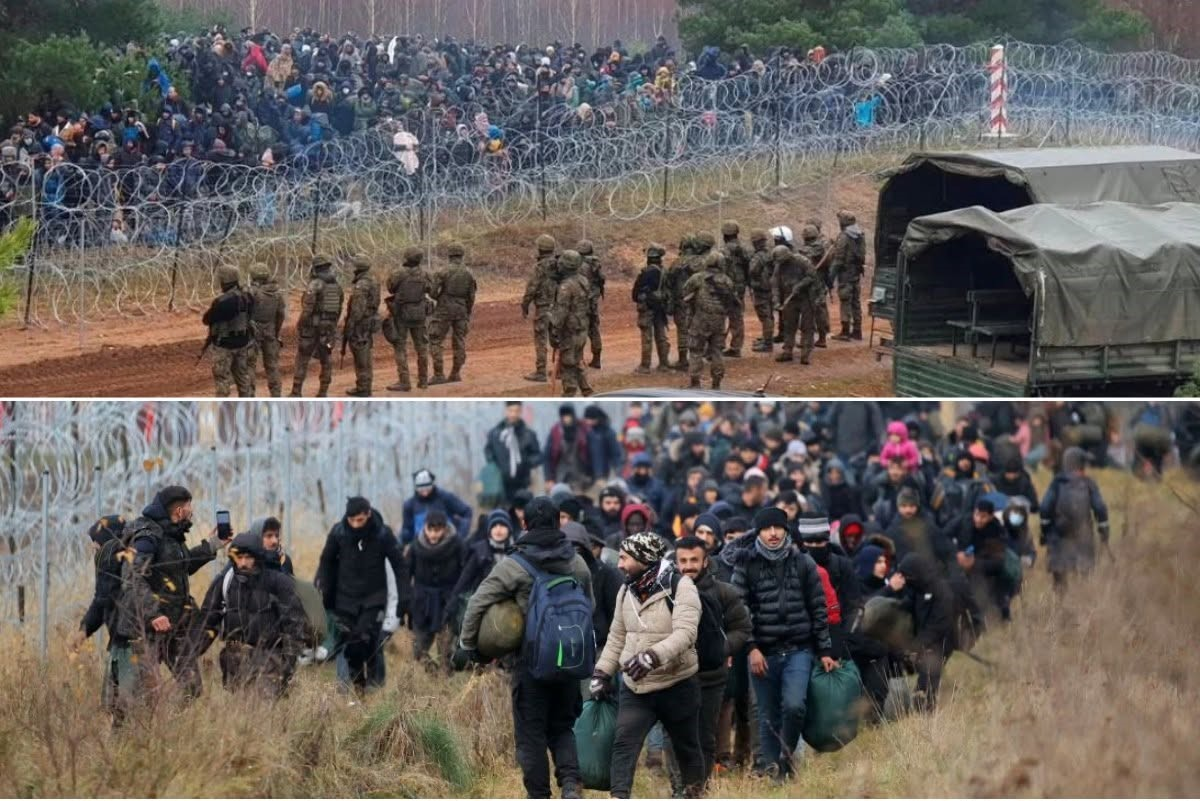
The Poland–Belarus border has remained one of Europe’s most closely watched frontiers since migration pressures intensified several years ago. Successive incidents involving groups of migrants attempting to cross into Poland have transformed the area into a focal point of wider European discussions about border protection and international cooperation. While each individual event has its own specific circumstances, many observers view the latest development as part of a broader pattern that continues to challenge policymakers across the continent.
According to preliminary reports, the newly reported incident involved activity near the frontier that prompted a response from Polish border authorities. At the time of writing, officials were continuing to gather information, and some details remained subject to verification. As is often the case with rapidly developing border incidents, early reports from different sources varied regarding the precise sequence of events. Authorities have therefore urged caution until official investigations establish a more complete account of what occurred.
Poland has consistently maintained that securing its eastern border is a matter of both national and European security. Government officials have argued that the country is responsible not only for protecting its own territory but also for safeguarding one of the European Union’s external frontiers. Successive Polish governments have invested heavily in physical barriers, surveillance technology, border patrol personnel and military support intended to reduce irregular crossings while improving the country’s ability to respond to rapidly changing situations along the frontier.
Supporters of Poland’s current border strategy argue that strong enforcement measures are necessary to deter irregular migration and combat organized smuggling networks. They contend that effective border controls help prevent dangerous journeys, discourage criminal organizations that profit from migration and preserve confidence in the integrity of legal immigration systems. Many also argue that maintaining secure external borders strengthens the functioning of the Schengen Area by allowing internal border-free travel among participating European states.
Government representatives have repeatedly described the situation on the Belarusian border as involving more than ordinary migration management. Polish officials have previously accused Belarus of facilitating or encouraging migration flows toward the European Union as part of a broader geopolitical strategy. Belarus has rejected accusations that it deliberately orchestrates migration pressure against neighboring countries. The differing positions remain a continuing source of diplomatic disagreement between the two governments and have also drawn attention from European institutions.
Critics of Poland’s border approach emphasize a different set of concerns. Human rights organizations, refugee advocacy groups and several international institutions have argued that governments must continue to respect international obligations toward individuals seeking asylum, regardless of the circumstances in which they arrive. They stress that border security and humanitarian protection are not mutually exclusive objectives and argue that vulnerable individuals should have access to fair procedures allowing their protection claims to be assessed under applicable national and international law.
International refugee law recognizes the right of individuals to seek asylum when they fear persecution in their countries of origin. At the same time, states retain authority to regulate entry into their territory, protect national security and determine whether applicants satisfy the legal requirements for refugee status. Balancing these two principles has become one of the most difficult challenges facing governments throughout Europe as migration pressures continue to evolve.
The European Union has repeatedly sought to develop a more coordinated approach to migration and asylum policy, but member states continue to disagree over several fundamental issues. Questions surrounding burden-sharing, external border management, return procedures and relocation mechanisms have generated prolonged political negotiations. Countries located along the EU’s external frontiers often argue that they bear a disproportionate share of migration pressures, while other member states advocate different approaches to distributing responsibility across the Union.
Poland has generally favored stronger external border protection while expressing caution regarding mandatory migrant relocation proposals within the European Union. Polish leaders have argued that each member state should retain significant authority over its own migration policies and should not be compelled to accept relocation quotas established at the European level. These positions have received support from some governments while drawing criticism from others that favor more coordinated EU-wide mechanisms.
The latest border incident has also renewed discussion about hybrid security threats. Security analysts have increasingly examined situations in which migration flows intersect with broader geopolitical tensions, particularly where governments accuse neighboring states of using migration to exert political pressure. Such claims require careful assessment based on available evidence, as distinguishing between spontaneous migration movements, organized smuggling operations and alleged state involvement can present significant analytical challenges.
For local communities living near the border, migration policy is often experienced through practical rather than abstract concerns. Residents frequently cite issues involving public safety, emergency services, infrastructure, economic activity and the visible presence of security personnel. Others express sympathy for migrants facing dangerous conditions while simultaneously supporting measures intended to maintain effective border management. These diverse perspectives illustrate that public opinion often extends beyond simple political divisions.
Humanitarian organizations working in border regions continue to emphasize the importance of protecting vulnerable individuals, particularly children, families and those requiring medical assistance. Aid groups have consistently called for safe access to humanitarian support, transparent procedures and respect for international legal standards. They also stress that many migrants undertake dangerous journeys because of conflict, political instability, persecution or severe economic hardship in their countries of origin.
Meanwhile, security agencies emphasize that irregular migration can create opportunities for organized criminal groups engaged in human smuggling and trafficking. European law-enforcement authorities have repeatedly warned that criminal networks frequently exploit vulnerable migrants by charging substantial sums for dangerous journeys while exposing them to significant risks during transit. Combating these organizations remains an important component of broader European migration policy.
Media coverage of border incidents has become increasingly influential in shaping public opinion. Images and short videos shared online often generate immediate emotional responses, yet they may not capture the full context surrounding complex operational situations. Journalists, fact-checkers and public authorities frequently encourage audiences to distinguish between verified reporting, official statements and unverified claims circulating through social media platforms.
Political reactions to the latest incident have reflected wider ideological differences across Europe. Parties emphasizing border security have argued that the event demonstrates the continuing need for robust enforcement measures and investment in frontier protection. Parties placing greater emphasis on humanitarian considerations have urged governments to ensure that security responses remain consistent with international refugee law and human rights obligations. Most mainstream policymakers acknowledge the importance of both security and humanitarian principles, although they differ substantially regarding how these objectives should be balanced in practice.
The broader geopolitical context further complicates the discussion. Relations between the European Union and Belarus have remained strained in recent years over a range of diplomatic, political and security issues. Border developments therefore tend to be interpreted not only through the lens of migration policy but also within the wider framework of regional security and international relations. As a result, individual incidents often carry significance extending well beyond their immediate operational impact.
Experts on migration policy generally caution against drawing sweeping conclusions from any single border event. While individual incidents may highlight important operational challenges, long-term migration trends are influenced by a wide range of factors, including armed conflict, economic conditions, climate-related pressures, demographic change, international cooperation and evolving smuggling routes. Effective policymaking therefore requires sustained analysis rather than reliance upon isolated events alone.
The latest developments also underscore the continuing importance of accurate information during rapidly evolving situations. Preliminary reports may change as investigations progress, additional witnesses come forward or official statements provide greater clarity. Responsible reporting therefore requires distinguishing between confirmed facts, official allegations, political interpretations and ongoing inquiries, particularly where security operations are involved.
As authorities continue to examine the circumstances surrounding the incident, the political debate is likely to continue both within Poland and across Europe. Questions concerning border security, asylum procedures, humanitarian protection and international cooperation remain central to European policymaking, with governments seeking solutions that address multiple priorities simultaneously. While consensus remains difficult to achieve, the discussion reflects the broader challenge of managing migration in an increasingly interconnected and geopolitically complex environment.
Ultimately, the renewed attention surrounding Poland’s border policy demonstrates that migration remains one of Europe’s defining political issues. Supporters of stronger border enforcement argue that national security, public confidence and the integrity of legal immigration systems depend upon effective external frontier protection. Critics emphasize that humanitarian responsibilities and international legal obligations should remain integral components of any migration strategy. As investigations into the latest incident continue and policymakers assess future responses, the balance between these competing priorities will likely remain at the center of European political debate for years to come.