Westminster Explodes as Rupert Lowe Tears Into thePowerful Over Britain’s Post Office Scandal
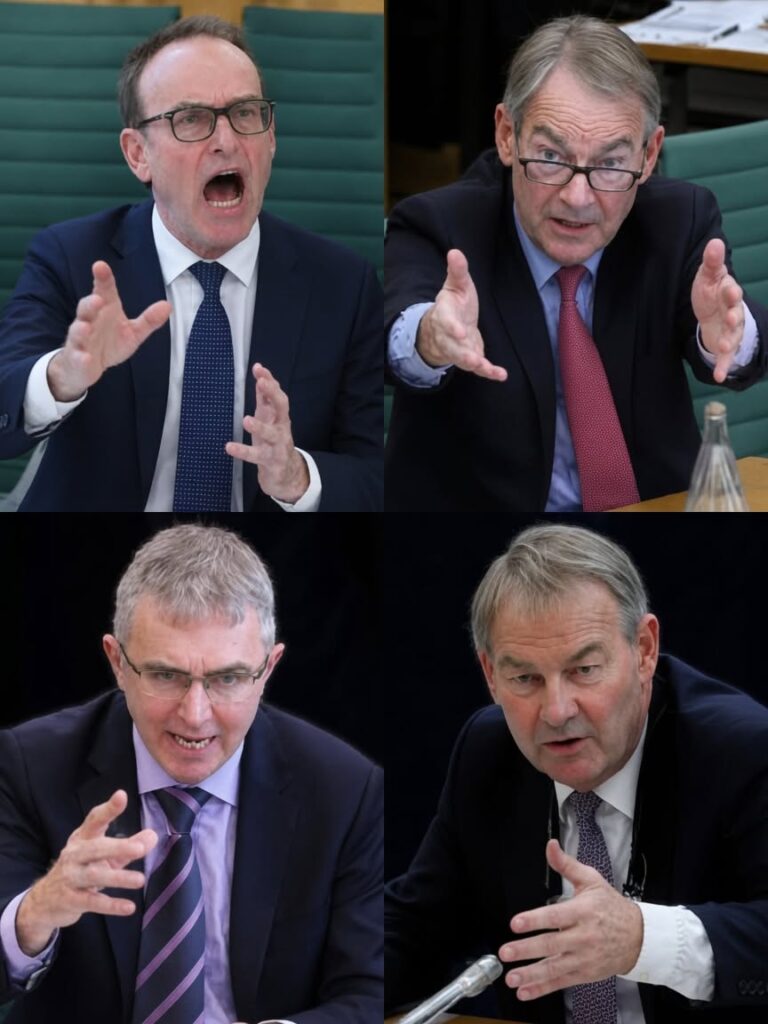
Westminster erupted after Rupert Lowe turned a routine hearing into a fierce confrontation over the Post Office Horizon scandal. His remarks struck a nerve because the scandal is no longer viewed as a distant administrative failure. It has become a test of whether Britain’s institutions can admit fault, punish failure, and repair damage done to ordinary people. The hearing quickly moved beyond procedure and became a wider argument about power. Lowe’s message was blunt: victims have waited too long, and the people responsible have faced too little.
The Post Office Horizon scandal remains one of Britain’s most serious miscarriages of justice. The
statutory inquiry was set up to examine the implementation and failures of the Horizon IT system
across its lifetime, after sub-postmasters were wrongly accused of theft, fraud, and false accounting because of shortfalls linked to the system. The inquiry’s work has exposed deep questions about governance, disclosure, legal decisions, corporate culture, and ministerial oversight. For victims, the scandal was not only about faulty software. It was about being disbelieved by institutions with more money, more lawyers, and more power.
That is why Lowe’s attack landed so heavily. He did not speak about the scandal as a technical
breakdown or a slow-moving compensation matter. He framed it as a failure of accountability by
people at the top. That framing matters because many victims and campaigners believe the scandal has been softened by careful official language. Words such as “process,” “redress,” “review,” and
“lessons learned” can sound empty when lives have been destroyed. Lowe’s intervention cut
through that language and forced the hearing back to the human cost.
At the center of the scandal are sub-postmasters who lost homes, businesses, reputations, savings, health, and years of their lives. Some were prosecuted. Others were not convicted but were still financially ruined or socially shamed. Many were told they were alone when similar problems were appearing across the network. That sense of isolation made the injustice even harsher. The system did not just fail them; it made them doubt themselves while the real questions were pushed aside. Lowe’s supporters say this is exactly why his confrontation was needed. They argue that Westminster has spent years speaking politely about a scandal that should provoke outrage. To them, his speech reflected the anger of people who believe accountability has been delayed, diluted, and buried under committees. They see his attack on senior figures as a direct challenge to a political culture that apologises without punishing. In that view, the hearing became powerful because someone finally spoke with the force victims deserved years ago. Critics take a more cautious view. They argue that anger is justified, but parliamentary attacks must lead to specific evidence, legal action, and structural reform. The scandal is too serious to be reduced to just a viral clip or a political weapon. Victims need compensation, overturned convictions where
appropriate, full disclosure, and action against those who broke rules or misled others. A dramatic
Hearing can raise pressure, but it cannot replace the hard work of justice. That is the challenge
facing Lowe and every politician now speaking on the issue. The compensation issue remains one of the most painful parts of the scandal. In March 2026, Parliament’s Business and Trade Committee said serious structural failings persisted in redress, and
it criticised Fujitsu for acknowledging a moral duty to contribute while still making no interim
payment. The committee also said the total cost of redress had reached around £2 billion and
described the failure to offer an interim amount as unacceptable. For victims, these figures can feel both huge and hollow. Money has been promised, but many still feel trapped in another system that moves too slowly.
Fujitsu remains central to public anger because it supplied the Horizon system. MPs have urged the company to make an immediate payment toward the compensation bill, while the government and
Fujitsu have been discussing its contribution. The Guardian reported in June 2026 that Fujitsu had
not yet contributed toward a compensation bill of around £1.5 billion, despite admitting it had known since the 1990s that the Horizon system was faulty. That detail has sharpened the public mood. Many people cannot understand why victims are still waiting while those linked to the system have not yet paid their share.
Lowe’s attack drew force from that contradiction. If a company accepts moral responsibility, the
public expects visible action. If senior officials express regret, the public expects consequences. If
ministers promise justice, the public expects speed. Yet the scandal has often moved at the pace of institutions, not at the pace of the people harmed by them. That gap between public anger and official process is where the political pressure is now building.
The hearing also placed senior figures under sharper scrutiny. Lowe’s accusation was not only that mistakes were made, but that those in power failed to act when action was possible. That is the charge that cuts deepest in any scandal. A mistake can sometimes be explained. A cover-up, delay, or refusal to listen is harder to forgive. The public wants to know who knew what, when they knew it, and why the damage continued.
The Post Office scandal has always raised questions about hierarchy. Sub-postmasters were treated as suspects while the system above them defended itself. People at branch level carried the blame. People at senior level often appeared protected by distance, procedure, and legal advice. That imbalance is one reason the scandal still produces such anger. It looks to many people like a case where ordinary workers were punished while powerful decision-makers survived. The role of government remains uncomfortable. The Post Office was not an ordinary private company operating far from the state. It was publicly owned, politically overseen, and tied to public
trust. Ministers may not have run every decision, but government cannot fully step away from the
consequences. The deeper question is whether officials and ministers asked enough hard questions when warnings emerged. Lowe’s remarks forced that issue back into the room.
There is also a broader warning about technology. Horizon was treated by some as reliable even
when human beings were saying the numbers were wrong. That should alarm every public body that now relies on complex digital systems. Technology can make services faster, but it can also create new forms of institutional arrogance. When a computer system receives more trust than the people harmed by it, injustice can scale quickly. Horizon became a warning about what happens when software, legal power, and corporate defensiveness combine.
The scandal has also damaged faith in legal processes. Sub-postmasters faced accusations based
on data that later became deeply disputed. The use of private prosecutions by the Post Office has
drawn heavy criticism and raised questions about conflicts of interest. When the same institution has a stake in defending the system and pursuing the accused, the risk of injustice grows. Lowe’s attack gained attention because it tapped into that fear. The public wants to know why the legal safeguards failed so badly. The emotional force of the scandal cannot be separated from the politics. These were not abstract case files. They were people running local branches, serving communities, and trying to keep businesses alive. Many were pillars of their towns and villages before suspicion shattered their lives. Some carried shame for years before the wider truth became impossible to ignore. No official apology can fully return what was taken from them.
This is why public reaction to Lowe’s speech has been so strong. Supporters saw a rare moment of direct accountability in a system they believe often protects itself. Critics saw a performance that must now be tested against outcomes. Both reactions show the same thing: Britain has not moved on from the scandal. The country is still waiting for a form of justice that feels real rather than procedural. The next question is whether the hearing changes anything. Public anger has already forced inquiries, legislation, compensation schemes, and political promises. But victims and campaigners continue to warn that the pace remains too slow and the burden still too heavy. If Lowe’s intervention only creates headlines, it will fade like many Westminster moments. If it increases pressure for faster payments, clearer responsibility, and stronger sanctions, it may mark a more serious turning point. The scandal also exposes a larger crisis in public trust. Many voters now believe large institutions can fail badly and still protect themselves. They see senior figures leave posts, give evidence,
Express regret, and move on. They see victims forced to prove pain that should already be obvious. That perception is dangerous for any democracy. When people stop believing that power can be
held accountable, anger moves outside normal politics.
Westminster now faces a simple test. It can treat Lowe’s speech as another heated committee
exchange, or it can treat it as a warning that public patience is almost gone. The Post Office scandal has already shown what happens when warnings are ignored. The same mistake cannot be repeated in the search for justice. Victims need redress that is fast, fair, and respectful. The public needs to see consequences that match the scale of the failure.
For now, Rupert Lowe’s explosive speech has pushed the Post Office scandal back into the national spotlight. It has reminded Britain that the story is not finished, even if hearings have been held or apologies have been issued. Justice is not the same as regret. Accountability is not the same as explanation. Until victims receive full redress and those responsible face real consequences, the
question hanging over Westminster will remain brutal: who pays the price when the powerful fail and ordinary people are destroyed?