
Policing Row Erupts as Sadiq Khan Faces Tough Questions Over London’s Public Safety Debate
A heated exchange during London’s Mayor’s Question Time has once again placed policing, crime prevention, and public safety at the center of political debate in the British capital. The discussion, which saw Assembly Members challenge Mayor Sadiq Khan on policing resources, funding decisions, and the future direction of the Metropolitan Police Service, has generated widespread attention across political circles and social media. While supporters argue that the Mayor is operating within difficult financial constraints and continuing to invest in public safety, critics question whether current policies provide sufficient support for frontline policing. As with many political disputes surrounding crime and policing, the debate reflects broader questions about how London should balance limited public resources with growing public expectations regarding safety.
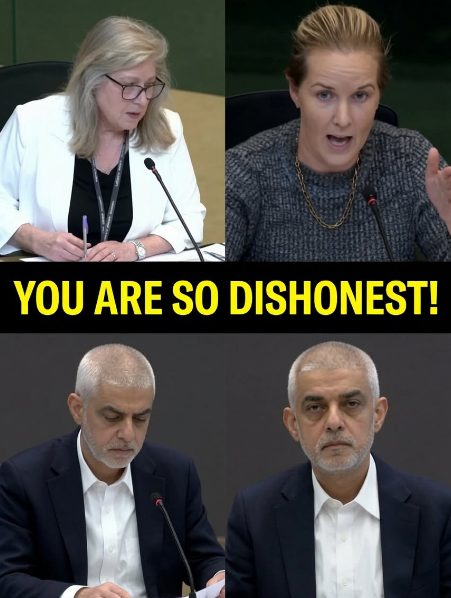
Mayor’s Question Time serves as one of the principal mechanisms through which the Mayor of London is held publicly accountable by members of the London Assembly. During these sessions, Assembly Members from different political parties have the opportunity to question the Mayor on policies, spending decisions, and issues affecting London’s residents. While exchanges are often robust, discussions surrounding policing frequently become among the most closely watched because they involve issues that directly affect everyday life, including crime rates, emergency
response, neighborhood patrols, and public confidence in law enforcement. The latest session proved no exception, with policing emerging as one of the dominant topics.
The discussion reportedly focused on concerns surrounding police funding, officer numbers, operational priorities, and the pressures facing the Metropolitan Police Service. Several Assembly Members questioned whether existing financial decisions could ultimately reduce the effectiveness of frontline policing or limit the force’s ability to respond to rising demands. Although the exact wording of every exchange has been interpreted differently by political observers, the central issue remained clear: whether London’s current policing strategy is adequately equipped to address the city’s increasingly complex security challenges.
The Metropolitan Police Service occupies a unique position within the United Kingdom. Responsible for policing one of the world’s largest and most diverse cities, the Met faces responsibilities extending well beyond ordinary local policing. Officers are tasked not only with neighborhood crime prevention but also with counterterrorism operations, protection of senior government officials, policing major demonstrations, responding to large public events, investigating serious organized crime, and supporting national security operations. These wide-ranging responsibilities require significant financial resources, advanced training, and careful operational planning.
Questions surrounding police funding are not new. For years, both national and local politicians have debated how best to finance policing while responding to broader pressures on public spending. The Metropolitan Police receives funding from several sources, including the UK Government and London’s local policing precept collected through council tax. Decisions regarding overall police budgets therefore involve multiple institutions, making discussions about responsibility more politically complex than they might initially appear.
During the latest Mayor’s Question Time, Assembly Members reportedly raised concerns about the impact that budgetary pressures could have on officer recruitment, specialist units, neighborhood policing teams, and frontline visibility. Critics argued that visible police presence remains one of the most important factors influencing public confidence and crime prevention. They questioned whether financial decisions might ultimately reduce the number of officers available to patrol communities or investigate criminal activity effectively.
Mayor Sadiq Khan defended his administration’s approach during the exchange, arguing that London’s policing challenges cannot be viewed solely through the lens of City Hall decisions. The Mayor has consistently maintained that significant pressures on police finances are linked to broader funding arrangements involving central government. His administration has previously argued that maintaining police services requires continued cooperation between local authorities and
Westminster, particularly given inflationary pressures, increasing operational costs, and growing demands placed upon law enforcement agencies.
Supporters of the Mayor point to several initiatives introduced during his tenure that they argue demonstrate continued investment in public safety. These include efforts to recruit additional police officers where funding has permitted, expanded programs aimed at reducing violence among young people, investments in neighborhood policing, and partnerships with local councils, schools, and community organizations designed to address the social causes of crime. According to supporters, policing cannot rely solely on enforcement but must also include prevention strategies that reduce offending before crimes occur.
Critics, however, argue that prevention alone cannot replace sufficient frontline policing capacity. They contend that officers responding directly to incidents, conducting visible patrols, and investigating crimes remain the foundation of effective public safety. Some Assembly Members questioned whether existing priorities allocate enough resources toward operational policing rather than broader strategic initiatives. Others suggested that public concerns regarding theft, burglary, violent crime, antisocial behavior, and robbery require stronger emphasis on traditional policing methods alongside preventive programs.
One recurring issue throughout the debate involved public perception of safety. Crime statistics provide one measure of policing effectiveness, but public confidence represents another important consideration. Surveys often show that residents’ feelings of safety are influenced not only by crime rates but also by factors such as visible police patrols, emergency response times, neighborhood engagement, and media coverage of high-profile incidents. Political debates over policing therefore frequently extend beyond statistical trends to encompass broader questions about community reassurance and trust.
The Metropolitan Police has itself undergone significant challenges in recent years. Beyond operational pressures associated with crime prevention, the force has faced extensive organizational reforms following a series of independent reviews and high-profile incidents that prompted calls for improvements in leadership, professional standards, accountability, and institutional culture. These reforms have required considerable attention from both police leadership and political authorities while the force continues carrying out its daily operational responsibilities. Financial pressures affecting policing are also influenced by wider economic conditions. Rising costs associated with salaries, equipment, technology, infrastructure, vehicles, fuel, training, and specialized operations have increased demands on police budgets across the United Kingdom. At the same time, police forces continue facing growing expectations regarding cybercrime, online fraud, digital investigations, domestic abuse, terrorism prevention, and organized criminal networks.
These expanding responsibilities mean that budget discussions increasingly involve questions about prioritization rather than simple funding increases or reductions.
The debate also reflects differing philosophies regarding public safety policy. Some policymakers emphasize stronger law enforcement, increased officer numbers, expanded stop-and-search powers, and tougher sentencing as the most effective responses to crime. Others argue that long- term crime reduction requires broader investment in education, youth services, mental health support, employment opportunities, housing stability, and community intervention programs. While these approaches are not necessarily mutually exclusive, political disagreements often arise over how limited public resources should be distributed among competing priorities.
Political differences within the London Assembly naturally contribute to these exchanges. Assembly Members represent multiple political parties, each bringing different perspectives on policing, taxation, government spending, and criminal justice policy. Consequently, Mayor’s Question Time often becomes a forum where wider ideological differences are expressed through specific policy discussions. Supporters of the Mayor may view criticism as politically motivated, while opponents argue they are fulfilling their democratic responsibility to scrutinize executive decisions.
The role of central government remains another significant aspect of the discussion. Responsibility for policing in London is shared across multiple institutions, with the Home Office playing a major role in determining national funding settlements, legislative frameworks, and policing priorities. City Hall, meanwhile, exercises strategic oversight through the Mayor’s Office for Policing and Crime. As a result, debates over policing frequently involve disagreements regarding which level of government bears primary responsibility for funding challenges or operational outcomes.
Public concern about policing often increases following widely reported criminal incidents. Although individual crimes may not necessarily indicate long-term trends, high-profile cases can significantly influence political discussions and public expectations. Politicians from across the political spectrum frequently respond by proposing policy changes, increased funding, legislative reforms, or revised policing strategies. Consequently, discussions such as those seen during Mayor’s Question Time are shaped not only by financial considerations but also by broader public concerns about safety and crime prevention.
Another important element involves neighborhood policing. Many policing experts argue that regular engagement between officers and local communities plays a significant role in preventing crime, gathering intelligence, and building trust. Visible neighborhood officers can develop relationships with residents, businesses, schools, and local organizations that support early intervention and community problem-solving. Questions about maintaining sufficient neighborhood policing capacity therefore remain central to debates over police budgets.
Technology is also transforming modern policing. Investment in surveillance systems, digital forensics, artificial intelligence, body-wom cameras, data analysis, and cybercrime capabilities has become increasingly important for police forces worldwide. While these technologies may improve investigative effectiveness, they also require substantial financial investment. Policymakers must therefore balance spending on technological modernization alongside maintaining adequate officer numbers and frontline services.
Public reactions to the latest exchange have reflected London’s diverse political landscape. Some commentators argued that Assembly Members were right to challenge the Mayor vigorously on issues directly affecting public safety. Others defended the Mayor’s responses, suggesting that policing debates should recognize the financial constraints facing public services across the country. Social media discussions illustrated how perspectives on policing often align with broader political views regarding taxation, public spending, government priorities, and criminal justice policy.
Independent analysts frequently note that evaluating policing performance requires consideration of multiple indicators rather than any single statistic. Crime rates, emergency response times, detection rates, victim satisfaction, officer retention, public confidence, and financial efficiency all contribute to understanding overall policing effectiveness. Political debates, however, often focus on the indicators that best support particular arguments, making comprehensive assessment more challenging for the public.
The discussion also highlights the importance of democratic accountability. Public officials responsible for policing policy are expected to explain spending decisions, justify strategic priorities, and respond to concerns raised by elected representatives. Mayor’s Question Time provides one such opportunity, allowing policy disagreements to be debated publicly while enabling Londoners to observe competing perspectives regarding the future of policing in their city.
Looking ahead, questions surrounding police funding and public safety are likely to remain prominent issues within London’s political agenda. Budget negotiations, crime trends, government funding settlements, recruitment efforts, and continuing reforms within the Metropolitan Police will all shape future discussions. Regardless of political affiliation, there appears to be broad agreement that maintaining effective policing remains essential for London’s security, economic vitality, and public confidence.
As the political debate continues, many observers emphasize the importance of distinguishing between verified policy decisions, political criticism, and campaign rhetoric. Mayor’s Question Time is designed to facilitate rigorous democratic scrutiny, and robust exchanges are an expected feature of the process. Whether the latest confrontation ultimately influences future policing policy, budget allocations, or public opinion remains to be seen. For now, the discussion serves as another
reminder that questions surrounding policing, public safety, and government accountability continue
to occupy a central place in London’s political life, with decisions made today likely to shape the city’s approach to law enforcement for years to come.