
Rupert Lowe’s Westminster Speech Sparks Fresh Debate Over Migration, Public Safety, and Political Accountability
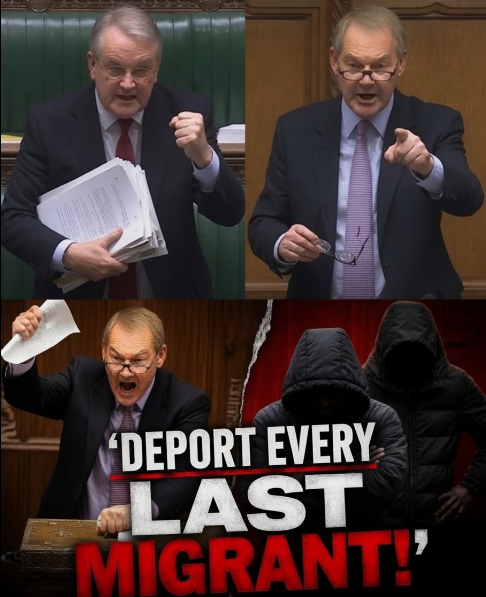
A passionate speech by Rupert Lowe has reignited debate in Westminster over one of Britain’s most politically sensitive issues: migration and public safety.
The Reform UK figure used his platform to argue that concerns expressed by many voters about immigration, border control, crime, and pressure on public services deserve greater political attention. His remarks quickly attracted reactions from supporters who praised his willingness to challenge established views, while critics questioned some of his claims and warned against simplifying complex issues.
The controversy reflects a wider divide in British politics.
For some voters, the speech represented a long-awaited acknowledgment of frustrations they believe have been ignored by successive governments.
For others, it raised concerns about whether political arguments around migration are being framed in a way that creates division rather than practical solutions.
At the center of the debate is a question that continues to shape politics across Britain:
How should a democratic country balance control of its borders, public safety, and humanitarian responsibilities?
A Speech Focused on Public Concerns
Rupert Lowe has built much of his political profile around direct criticism of government policy and calls for greater accountability.
His supporters argue that he speaks to voters who feel disconnected from Westminster and believe politicians have failed to address everyday concerns.
They point to issues such as:
- Pressure on housing.
- Strain on public services.
- Concerns about illegal migration.
- Community safety.
- Public confidence in government decisions.
For these voters, the importance of the speech was not only the specific policies discussed, but the fact that a politician was willing to openly address topics that they believe have often been avoided.
They argue that democracy requires politicians to listen to uncomfortable opinions rather than dismiss them.
Migration as a Political Flashpoint
Migration has become one of the defining issues in British politics.
Supporters of stricter immigration policies argue that governments must have stronger control over who enters the country and how migration levels are managed.
They say that rapid population changes can create challenges for. - Housing availability.
- Healthcare services.
- Schools.
- Infrastructure.
- Local communities.
From this perspective, controlling migration is not only a border issue.
It is also about ensuring that public systems can cope with demand.
Supporters of Lowe’s position argue that voters who raise these concerns should not be portrayed as unreasonable or hostile. They say many people are simply asking whether current policies are sustainable.
Critics Warn Against Simplifying Complex Problems Critics argue that migration debates require more nuance.
They point out that issues such as housing shortages, NHS pressures, and economic challenges are influenced by many factors beyond immigration alone. These include: - Government investment decisions.
- Planning policies.
- Workforce shortages.
- Economic conditions.
- Demographic changes.
. - Infrastructure development.
They argue that focusing too heavily on migration risks overlooking other causes of public frustration.
Critics also warn that political language matters. They say leaders have a responsibility to discuss immigration policy without creating unfair assumptions about entire groups of people.
For them, effective policy requires evidence, not only strong rhetoric.
Public Safety at the Heart of the Argument
One of the strongest themes in Lowe’s speech was public safety.
This issue resonates strongly with many voters because safety is one of the most basic responsibilities expected from government.
People want confidence that:
⚫ Laws are enforced. - Criminal activity is addressed.
- Communities are protected.
. - Authorities respond effectively.
Supporters argue that governments must take public concerns seriously and cannot ignore fears about crime or social disorder.
They believe political leaders sometimes hesitate to discuss these issues openly because they fear controversy. - Critics respond that public safety policies should be based on evidence rather than political pressure.
- They argue that crime prevention requires effective policing, community investment, education, and social policies -not only stronger political language.
- The Politics of Trust
- Behind the migration debate is a deeper issue: trust.
- Many voters have become increasingly skeptical of political institutions.
- They question whether governments understand their experiences.
- They ask why problems such as housing shortages, rising costs, and pressure on services appear to continue despite years of political promises.
- Politicians who speak directly about these frustrations often gain attention because they appear to challenge the status quo.
- This is part of the reason figures such as Rupert Lowe have found support among some voters.
- They present themselves as willing to ask questions that others avoid.
- However, critics argue that trust is not rebuilt only through criticism.
- They say political leaders must also demonstrate realistic plans and practical solutions.
- The Challenge of Turning Criticism Into Policy
- A major challenge facing any politician who highlights public frustration is moving from identifying problems to providing solutions.
- It is relatively easy to point out that a system is under pressure.
- The harder questions are:
- What should change?
- How would reforms be funded?
How quickly could they happen?
What consequences might follow?
Migration policy is a particularly difficult example because it involves competing priorities.
A government may want lower illegal migration while also maintaining international obligations.
It may want stronger borders while supporting industries that rely on overseas workers.
It may want faster asylum decisions while ensuring fairness.
These challenges explain why migration remains one of the most difficult areas of government policy.
Westminster’s Changing Political Landscape
Lowe’s speech also reflects a broader shift in British politics.
Traditional party loyalties have weakened.
Many voters are increasingly willing to support alternatives if they believe established parties have failed to deliver.
Issues such as immigration, national identity, economic insecurity, and trust in institutions have created opportunities for newer political movements.
Reform UK has benefited from this environment by positioning itself as a challenge to the traditional political system.
Supporters believe the party represents voters who feel ignored.
Opponents argue that political change must be accompanied by careful policy development and responsible leadership.
The debate around Lowe’s speech is therefore part of a much larger political transformation.
The Role of Media and Social Platforms
The reaction to political speeches today is often shaped by social media.
A short video clip or powerful quote can reach millions of people within hours.
Supporters may share moments that reinforce their views.
Critics may highlight different parts of the same speech.
This can create competing interpretations of the same event.
The advantage is that more people can participate in political discussions.
The disadvantage is that complex debates can become reduced to slogans.
Migration, public safety, and government policy involve detailed questions, but online discussions often reward simple messages.
Finding Balance in the Debate
A serious discussion about migration and public safety requires acknowledging concerns while avoiding unnecessary division.
A balanced approach would recognize several realities:
Countries have a legitimate interest in controlling their borders.
Communities need confidence that public services can meet demand.
People have a right to raise concerns about government policy.
At the same time, migrants should not automatically be viewed as threats.
Policies must be based on evidence.
Public debate should focus on solutions rather than only blame.
The strongest democratic discussions are those that allow disagreement while maintaining respect.
Conclusion: A Speech That Reflects Britain’s Wider
Debate
Rupert Lowe’s Westminster speech has become another moment in Britain’s ongoing conversation about migration, public safety, and political trust.
Supporters see it as a necessary challenge to a political system they believe has ignored public concerns for too long.
Critics see it as an example of how sensitive issues can become oversimplified in political debate.
But beyond the arguments over individual statements, the wider issue remains clear:
Many people want answers about how Britain manages migration, protects communities, and maintains confidence in public institutions.
The challenge for politicians is not only identifying concerns.
It is providing solutions that are effective, lawful, and capable of bringing people together.
Because the future of Britain’s migration debate will not be decided only by the loudest speeches.
It will be decided by whether leaders can turn public frustration into practical action.