GET OUT OR GET DEPORTED”? CONTROVERSIALREMARKS ATTRIBUTED TO RUPERT LOWE REIGNITENATIONAL DEBATE OVER IMMIGRATION, FREESPEECH, AND BRITAIN’S FUTURE
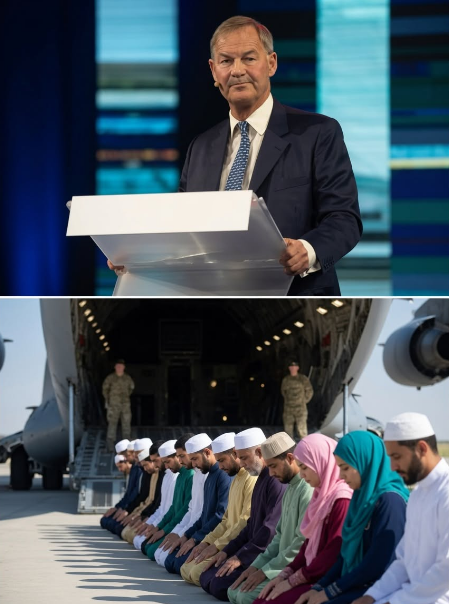
Britain is once again at the center of a fierce political debate following the circulation of social media posts and video clips claiming that MP Rupert Lowe delivered a final message to Muslims saying, “Get out or get deported.” The wording, widely shared across online platforms, has generated intense reactions from supporters and critics alike. However, as with many viral political claims, it is important to distinguish between verified quotations, edited clips, political commentary, and headlines designed to attract attention. While Lowe has consistently advocated for tougher immigration and deportation policies, the precise context and authenticity of some widely circulated statements remain the subject of public discussion. The controversy has nevertheless reopened one of Britain’s most divisive political conversations: how should the country balance national security, immigration control, religious freedom, and social cohesion?
The renewed attention comes during a period of heightened political polarization across the United Kingdom. Immigration remains one of the defining issues in British politics, influencing debates over public services, border security, integration, housing, employment, and national identity. Political parties continue to offer sharply different visions for addressing both legal and illegal migration. As elections approach and public demonstrations become increasingly common, politicians on all sides have adopted stronger language in an effort to appeal to their supporters. The result has been a political environment in which even a short video clip can dominate national headlines within hours.
Rupert Lowe has emerged in recent years as one of the most outspoken advocates for stricter immigration policies. Throughout his public appearances and parliamentary interventions, he has argued that Britain should dramatically strengthen border enforcement, accelerate the removal of individuals without legal permission to remain, and prioritize the interests of British citizens in immigration policy. Supporters describe his approach as a response to growing public concern over illegal migration and pressure on public services. Critics, however, argue that some of his rhetoric risks increasing tensions surrounding already sensitive issues involving ethnicity, religion, and community relations.
The latest controversy illustrates how rapidly political messaging can evolve once it reaches social media. Headlines often compress lengthy speeches into a few dramatic words, while short video clips may circulate without the broader context in which remarks were originally delivered. In many cases, audiences encounter only edited excerpts rather than complete speeches or interviews. This can lead to very different interpretations depending on which version individuals see first. Media analysts therefore continue encouraging the public to consult full recordings and reliable reporting before drawing conclusions about politically charged statements.
At the center of the debate is the distinction between immigration policy and religious identity. Britain is home to millions of Muslims who represent diverse ethnic, cultural, and professional backgrounds. The overwhelming majority are British citizens or lawful residents who participate fully in British society. Public policy concerning immigration enforcement generally applies according to immigration status rather than religious affiliation. Consequently, any suggestion that government policy should target individuals based solely on religion would likely attract intense legal, political, and constitutional scrutiny. Much of the current debate therefore focuses on whether political rhetoric is directed toward illegal immigration, extremist activity, or broader religious communities.
Supporters of Lowe argue that his broader political message has consistently centered on individuals who break British law or refuse to integrate into British society, rather than ordinary citizens practicing their religion peacefully. They contend that critics frequently interpret his statements in the broadest possible manner while overlooking repeated calls for stronger law enforcement against illegal migration and criminal offenders. According to this perspective, robust
immigration enforcement is compatible with protecting freedom of religion and equal treatment before the law. Many supporters further argue that governments have a responsibility to remove foreign nationals convicted of serious crimes where legislation permits.
Opponents reject that interpretation, arguing that inflammatory language-particularly when presented without careful distinction can unintentionally stigmatize entire communities. Civil rights organizations have repeatedly emphasized that political leaders carry significant responsibility because their words influence public attitudes far beyond their immediate supporters. Critics warn that broad or emotionally charged messaging may deepen mistrust between different communities and contribute to an increasingly polarized national conversation. They argue that debates over immigration should remain focused on evidence, policy proposals, and legal frameworks rather than generalized rhetoric.
Britain’s Muslim population has grown steadily over several decades and now forms an important part of the country’s social, economic, and cultural life. Muslims serve throughout British society as doctors, teachers, engineers, business owners, military personnel, police officers, academics, civil servants, and elected representatives. At the same time, Britain-like many European countries- has faced ongoing debates regarding integration, religious accommodation, counterterrorism policies, and community cohesion. These discussions have often proven politically sensitive because they involve both constitutional rights and legitimate public policy concerns.
Immigration itself remains a subject of considerable complexity. Legal migration, refugee protection, asylum claims, family reunification, skilled worker programs, student visas, and illegal entry all operate under different legal frameworks. Political campaigns frequently simplify these distinctions during public debate, even though government policy treats each category differently. Experts regularly caution against assuming that one policy proposal necessarily applies across every immigration category. Understanding these legal differences is essential when evaluating political claims.
Recent years have seen governments across Europe introduce increasingly strict migration measures. Several countries have expanded deportation powers, strengthened border controls, negotiated agreements with third countries, or revised asylum procedures in response to rising migration pressures. Britain has similarly proposed and implemented various legislative reforms aimed at reducing irregular migration and increasing removals where legally possible. These policies have generated vigorous debate within Parliament, the courts, and international human rights organizations. Consequently, discussions involving deportation now occur within a broader European context rather than solely as a domestic British issue.
Free speech has become another major theme within this controversy. Many supporters argue that politicians must retain the freedom to discuss difficult subjects including immigration, religious extremism, and national security-without fear of political censorship. They believe suppressing controversial opinions only increases public frustration and undermines democratic debate. Others respond that freedom of expression carries responsibilities, particularly for public figures whose statements may influence social tensions. Democratic societies therefore continue debating how to protect open discussion while discouraging language that could contribute to hostility or discrimination.
The role of social media has dramatically intensified these disagreements. Platforms capable of reaching millions of viewers within hours often reward content that generates strong emotional responses. Headlines emphasizing outrage frequently receive greater engagement than nuanced policy analysis. Algorithms may therefore amplify the most controversial interpretations of political events rather than the most balanced ones. As a result, audiences increasingly encounter political debates through fragmented clips, viral posts, and commentary rather than complete speeches or official documents.
Mainstream media organizations have approached the controversy from different editorial perspectives. Some outlets have focused primarily on the implications of Lowe’s broader immigration agenda, while others have concentrated on questions surrounding the reported wording itself. Journalists have also examined the legal realities of deportation policy, emphasizing that removals generally require established legal procedures rather than political declarations alone. Immigration enforcement in Britain operates within domestic legislation, judicial oversight, and international legal obligations, making implementation significantly more complex than campaign slogans sometimes suggest.
Legal experts note that British citizens cannot simply be deported because of their religion or political beliefs. Deportation powers primarily apply to foreign nationals under circumstances defined by immigration law and subject to legal safeguards. Individuals facing removal often have access to appeals, judicial review, or protections arising under domestic legislation and international agreements. Consequently, political rhetoric advocating deportation must ultimately operate within an established legal framework. Courts continue playing an important role in determining how immigration laws are interpreted and applied.
The political impact of controversies such as this often extends well beyond the original remarks themselves. Supporters may view criticism as evidence that established institutions resist open discussion of immigration, while opponents may see increasingly forceful language as evidence of growing political radicalization. Both interpretations contribute to broader narratives already shaping
British politics. Elections, parliamentary debates, and public demonstrations increasingly reflect these competing visions regarding the country’s future direction.
Polling over recent years has consistently shown that immigration remains among the issues British voters consider most important. Concerns regarding border security, asylum processing, housing availability, NHS capacity, and economic pressures frequently rank highly in public surveys. However, polling also indicates widespread support for lawful migration that contributes to the economy and recognition of Britain’s obligations toward genuine refugees. Public opinion therefore appears considerably more nuanced than political slogans sometimes suggest. Many voters simultaneously support stronger border enforcement while recognizing the importance of lawful immigration.
Religious freedom likewise remains a cornerstone of Britain’s constitutional tradition. Individuals of every faith-and those with no religious belief-are protected under laws promoting equality and freedom of worship. Government policy generally distinguishes between peaceful religious practice and unlawful conduct by individuals regardless of their faith. Political leaders across the spectrum have repeatedly affirmed that criminal responsibility attaches to individual actions rather than collective religious identity. This distinction remains central to Britain’s legal system.
Community leaders from multiple backgrounds have urged caution as the controversy continues to circulate online. They encourage citizens to engage with verified information, reject intimidation and violence, and participate in democratic debate respectfully. Many emphasize that disagreements over immigration policy should not undermine relationships between neighbors, colleagues, or communities. They argue that maintaining civil discourse becomes especially important during periods of heightened political tension. Such appeals reflect concern that online rhetoric can sometimes translate into real-world hostility.
Analysts also observe that emotionally charged political language often serves electoral purposes by energizing supporters and attracting media attention. Strong slogans can dominate news cycles far more effectively than lengthy policy documents. Yet governing ultimately requires translating campaign rhetoric into legislation capable of surviving parliamentary scrutiny and judicial review. The gap between political messaging and practical implementation therefore remains an important consideration when evaluating controversial statements. Public debate frequently focuses on language long before concrete policy proposals emerge.
Ultimately, the controversy surrounding the reported remarks attributed to Rupert Lowe reflects much larger questions confronting Britain today. How should immigration be managed? Where should governments draw the line between robust political debate and language that risks increasing social division? How can democratic societies simultaneously protect free expression,
uphold equal rights, enforce immigration law, and maintain public confidence in national institutions? These questions remain unresolved and continue shaping political discussion across the United Kingdom. As the debate develops, careful attention to verified facts, legal realities, and full
contextual reporting will remain essential for understanding one of the country’s most consequential and emotionally charged public policy issues.