Political Storm Erupts After Unverified Leak Claims Spark Questions Over Government Accountability
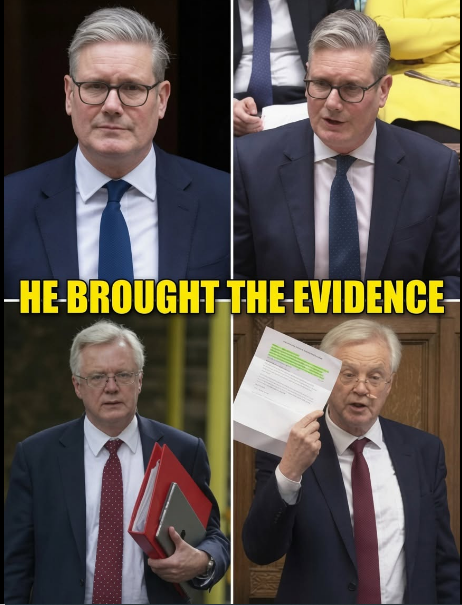
A wave of speculation has swept through political circles after online posts claimed that a leaked document could expose serious failures at the highest levels of government. The allegations, which have spread rapidly across social media, describe the document as a “smoking gun” capable of reshaping the country’s political landscape and undermining confidence in the Prime Minister’s leadership. However, at the time of writing, no independently verified evidence has confirmed the authenticity of the alleged leak or the extraordinary conclusions being drawn from it. Nevertheless, the controversy has reignited broader debates over transparency, accountability, and public trust in government institutions. Whether the claims ultimately prove credible or fade into another chapter of political speculation, they have already succeeded in capturing national attention and fueling intense public discussion.
For any government, trust is among its most valuable assets. Political authority depends not only on winning elections but also on maintaining public confidence that decisions are made responsibly, transparently, and in accordance with the law. When allegations emerge suggesting that important information has been concealed or mishandled, even before they are verified, they often generate significant public interest. In today’s digital media environment, narratives can spread across social platforms within minutes, allowing speculation to travel much faster than official investigations. That dynamic has become increasingly common in modern politics, where competing interpretations often emerge long before facts have been established. The latest controversy appears to follow that familiar pattern.
The viral posts at the center of the debate describe what they call a leaked government document allegedly revealing catastrophic negligence by senior officials. According to those circulating the claims, the material represents definitive proof that key decisions were mishandled and that senior leadership failed to act appropriately. Yet despite the dramatic language accompanying these assertions, no official investigative body has publicly confirmed the document’s authenticity or its contents. Independent news organizations have also emphasized the importance of verification before drawing conclusions. Until credible evidence becomes available, the allegations remain unverified and should be treated with appropriate caution.
Political observers note that leaks have long played an important role in democratic societies. Throughout history, confidential documents have sometimes revealed genuine misconduct, exposed policy failures, or informed important public debates. At the same time, history also offers numerous examples of incomplete documents, misleading excerpts, manipulated material, or information presented without sufficient context. Distinguishing between authentic revelations and politically motivated narratives often requires careful forensic analysis, independent reporting, and official investigation. That process rarely produces immediate answers, even when public demand for clarity is intense.
Supporters of the government’s critics argue that the allegations deserve a thorough and transparent investigation regardless of political consequences. They contend that any credible claim involving potential negligence at senior levels should be examined independently to preserve public confidence. From their perspective, transparency is not merely a political slogan but an essential safeguard for democratic institutions. They argue that refusing to examine such allegations could further damage trust. Many insist that only an impartial review can determine whether the claims have merit or should be dismissed.
Government supporters, however, caution against treating sensational online narratives as established fact. They argue that extraordinary accusations require equally compelling evidence and wam that political discourse has become increasingly vulnerable to misinformation and selective
presentation of documents. Officials and allies often emphasize that investigations should be based on verified evidence rather than public pressure generated through viral content. They also point out that premature conclusions can unfairly damage reputations before the facts are fully understood. Such arguments have become increasingly common in an era where digital platforms amplify political controversy.
The timing of the controversy has also attracted attention. Political analysts frequently observe that leaks and anonymous disclosures often emerge during periods of heightened political tension, major legislative debates, or approaching elections. Whether coincidental or strategic, such timing inevitably raises questions about motivation. Some analysts suggest that individuals may release confidential information to influence public opinion, pressure policymakers, or shape the media agenda. Others caution that timing alone should never determine how allegations are evaluated. Instead, every claim must ultimately stand or fall on the strength of verifiable evidence.
Legal experts note that the existence of a leaked document does not automatically establish wrongdoing. Authenticity, completeness, chain of custody, and surrounding context all play critical roles in determining whether any document can be considered reliable evidence. Investigators typically examine metadata, source credibility, document integrity, and corroborating testimony before reaching conclusions. Without those safeguards, isolated excerpts may create misleading impressions. As a result, experienced observers often advise patience while verification processes unfold.
The controversy has also highlighted the increasingly powerful role of social media in shaping political narratives. Within hours, dramatic headlines and emotionally charged commentary can reach millions of users worldwide. Algorithms frequently reward content that generates strong emotional reactions, allowing sensational claims to spread rapidly regardless of their accuracy. As a consequence, public perception may begin shifting long before journalists or investigators have an opportunity to verify underlying facts. This phenomenon has transformed the relationship between politics, media, and public opinion.
Opposition politicians have reportedly called for greater transparency whenever serious allegations emerge involving public administration. While specific responses vary across the political spectrum, many lawmakers generally argue that governments should provide timely explanations whenever significant public concern develops. Such responses are often intended to reassure citizens that institutions remain accountable. At the same time, responsible parliamentary oversight requires distinguishing between legitimate inquiries and unsupported speculation. That balance is essential for maintaining confidence in democratic processes.
Constitutional scholars frequently point out that governments are designed to withstand political controversy through established institutional mechanisms. Parliamentary scrutiny, judicial review, independent watchdogs, auditors, ethics commissions, and investigative bodies all serve as checks on executive authority. These mechanisms exist precisely because allegations occasionally arise against those in power. Whether the current controversy ultimately results in formal investigations depends on evidence rather than public emotion. Institutional resilience often becomes most visible during periods of intense political pressure.
Public reaction has reflected deep political polarization. Some citizens view the allegations as potentially validating long-standing concerns about government transparency, while others believe the controversy illustrates how quickly unverified information can dominate national debate. Across online platforms, discussions have become increasingly heated, with competing interpretations often reflecting broader political loyalties rather than confirmed facts. Such divisions are hardly unique to one country. Democracies around the world continue to grapple with balancing free expression against the risks posed by misinformation.
Journalists covering politically sensitive stories face significant professional responsibilities during moments like these. Ethical reporting requires distinguishing verified facts from allegations, clearly identifying anonymous claims, and avoiding language that implies certainty where evidence remains incomplete. Responsible news organizations generally seek corroboration from multiple independent sources before publishing serious accusations. They also provide opportunities for those accused to respond. Maintaining these standards helps preserve credibility even amid intense public pressure. The controversy has prompted renewed discussion about government transparency beyond the immediate allegations. Citizens increasingly expect greater access to official information, faster responses to public concerns, and stronger protections for whistleblowers acting in the public interest. Others argue that governments must simultaneously safeguard sensitive information relating to national security, diplomacy, or ongoing investigations. Finding an appropriate balance remains a persistent challenge in democratic governance. Public expectations continue evolving as information technology advances.
Political communication experts suggest that crises are often defined as much by official responses as by the original allegations themselves. Governments that communicate clearly, provide timely information, and cooperate with legitimate oversight may reduce uncertainty more effectively than those perceived as avoiding scrutiny. Conversely, delayed communication can sometimes encourage speculation regardless of the underlying facts. For this reason, crisis management has become an increasingly important aspect of modern political leadership. Public confidence often depends on both substance and communication.
International observers frequently monitor major political controversies because domestic developments can influence diplomatic relationships, investor confidence, and economic expectations. Markets generally prefer political stability and predictable governance. Although isolated controversies rarely determine long-term economic outcomes on their own, prolonged uncertainty may affect public confidence in institutions. Analysts therefore pay close attention not only to allegations themselves but also to how governments manage them. Institutional stability often matters more than short-term political headlines.
Another important question concerns the role of anonymous sources. Throughout investigative journalism, confidential informants have sometimes exposed corruption or misconduct that otherwise would have remained hidden. At the same time, anonymity can complicate efforts to assess credibility and motivation. Professional reporters therefore typically seek documentary evidence and independent confirmation before presenting anonymous claims as reliable. That cautious approach protects both journalistic integrity and the public interest.
For ordinary citizens following developments, distinguishing fact from speculation has become increasingly difficult. Conflicting narratives, edited video clips, selective quotations, and emotionally charged headlines can create confusion even among attentive readers. Media literacy experts encourage audiences to compare multiple reputable sources, examine original documents where available, and remain cautious of claims lacking independent verification. Such habits have become essential in today’s rapidly evolving information environment. Critical thinking remains one of the most effective tools against misinformation.
Whether this controversy ultimately produces significant political consequences depends on what evidence emerges in the coming days and weeks. If independent investigations validate serious allegations, public accountability mechanisms may become increasingly important. If, however, key claims cannot be substantiated, the episode may instead serve as another reminder of how rapidly unverified narratives can influence public discourse. Either outcome underscores the importance of careful reporting and responsible public debate. Democratic institutions function best when decisions are based on evidence rather than assumption.
For now, the central facts remain straightforward. Claims surrounding an alleged leaked document continue circulating widely online, generating substantial public attention and political discussion. However, many of the most dramatic assertions accompanying those claims have not been independently verified at the time of publication. As investigations, reporting, or official statements develop, the public will be better positioned to evaluate the controversy based on established evidence rather than speculation. Until then, the story remains less a confirmed political scandal than an illustration of how rapidly modern information ecosystems can transform allegations into national debate.