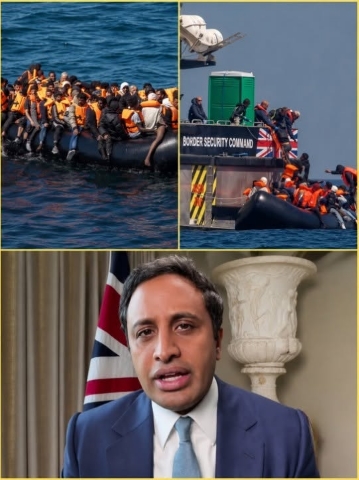
UK Border Policy Debate Intensifies as Reform UK Proposes Expanded Military Role in Channel Migration Strategy
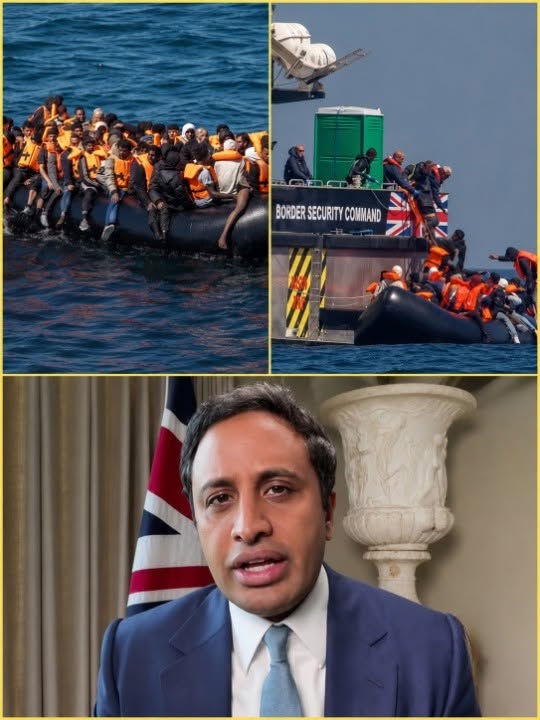
Migration across the English Channel has remained one of the most contentious political issues in the United Kingdom, shaping election campaigns, parliamentary debates, diplomatic relations with neighboring countries, and wider discussions about border security. Every announcement concerning immigration policy tends to attract intense media attention, particularly when proposals involve significant changes to the way the government would respond to people attempting to reach Britain by small boats. Against this backdrop, Reform UK has presented one of its most ambitious and controversial border security concepts yet, proposing a much larger role for Britain’s armed forces in efforts to reduce illegal Channel crossings. The proposal has generated extensive debate among supporters, critics, legal experts, military analysts, and humanitarian organizations, each interpreting the plan through different political and legal perspectives.
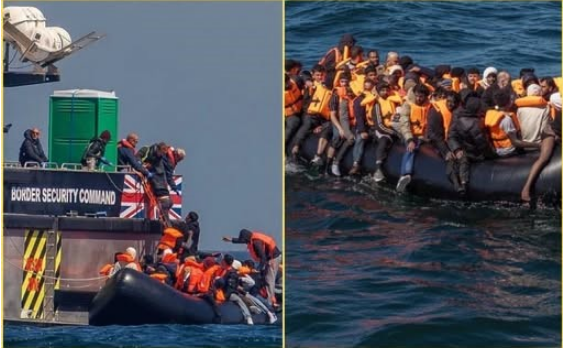
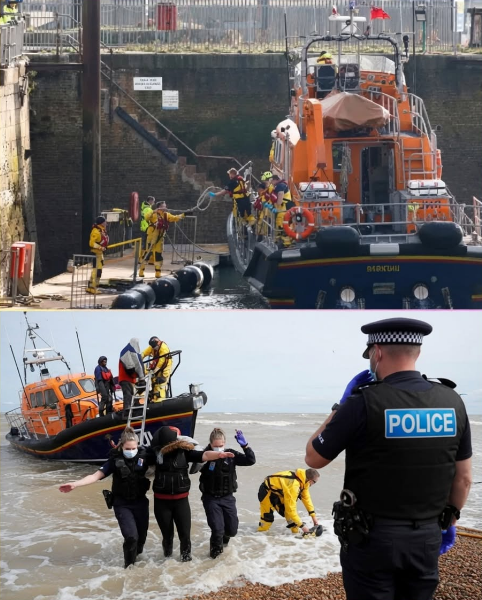
The proposal emerged during a period in which migration across the English Channel continues to dominate British political discourse. Since 2018, thousands of migrants have attempted the crossing each year, often departing from northern France in small inflatable boats. British governments led by different political parties have introduced a variety of policies aimed at reducing crossings, including agreements with France, enhanced surveillance technology, expanded Border Force operations, increased criminal enforcement against smuggling networks, and international diplomatic negotiations. Despite these efforts, crossings have continued, making the issue one of the defining political questions facing successive governments.
Supporters of stronger border enforcement argue that the current situation demonstrates the limitations of existing policies. They contend that criminal smuggling organizations have adapted quickly to government measures, continuing to organize dangerous journeys across one of the world’s busiest shipping lanes. According to this perspective, unless authorities fundamentally change their operational approach, the incentive for criminal networks to continue organizing crossings will remain. Advocates also emphasize the humanitarian risks associated with overcrowded inflatable boats, pointing to numerous fatalities that have occurred in the Channel over recent years.
Reform UK has argued that border protection should become a significantly higher national security priority. Party representatives have suggested expanding the operational role of Britain’s armed forces, including the Royal Navy, elements of the British Army, and the Royal Marines, alongside existing Border Force operations. Supporters describe the proposal as a comprehensive security strategy designed to deter illegal crossings before migrants reach British territorial waters. They argue that military resources possess surveillance capabilities, logistical support, rapid response assets, and operational coordination that could strengthen maritime border enforcement.
Although headlines circulating on social media have described the proposal using dramatic language, including references to Britain’s largest military operation since the Second World War, no official government policy currently describes the proposal in those terms. Rather, such language reflects political messaging and commentary rather than confirmed operational planning. As with many campaign statements made during highly polarized political debates, observers have cautioned against interpreting promotional language as finalized government policy or established military doctrine. Central to Reform UK’s proposal is the idea of expanding maritime interception capabilities in the English Channel. The party has argued that boats carrying migrants should be intercepted as early as legally possible, while simultaneously targeting the criminal organizations responsible for organizing departures. According to supporters, earlier intervention could reduce dangerous sea crossings and discourage future attempts by making successful arrival in Britain significantly less likely.
Questions surrounding military involvement immediately raise complex legal considerations. Unlike conventional military operations, maritime migration enforcement operates within an extensive framework of domestic legislation, international maritime law, refugee law, human rights obligations, and bilateral agreements between neighboring countries. Any future government seeking to implement expanded military participation would likely need to ensure that operational procedures remain consistent with these legal obligations while also coordinating closely with civilian authorities responsible for immigration enforcement.
Relations between the United Kingdom and France form another important dimension of the debate. Cooperation between the two countries has expanded considerably in recent years through joint patrols, intelligence sharing, financial support agreements, and coordinated action against people-smuggling networks. French authorities continue to patrol beaches along the northern French coastline while British agencies monitor activity within UK waters. Both governments have repeatedly emphasized that migration represents a shared challenge requiring international cooperation rather than unilateral action.
Some political commentators have questioned how any substantially more assertive maritime strategy might affect UK- France diplomatic relations. Because the Channel represents an internationally significant maritime corridor governed by complex jurisdictional arrangements, operational coordination between British and French authorities has become essential for both migration enforcement and maritime safety. Analysts suggest that any future changes would almost certainly require extensive diplomatic discussions before implementation.
Another important aspect concerns the practical role of the Royal Marines. The Royal Marines are widely recognized as one of Britain’s elite military forces, traditionally specializing in amphibious warfare, maritime security, expeditionary operations, and specialized military missions. Public discussion has occasionally speculated about whether elite military units could play larger roles in border security. However, military experts generally note that domestic border enforcement differs significantly from combat operations and would require carefully defined rules of engagement, legal authorities, and civilian oversight.
Some of the more sensational claims circulating online have suggested that military personnel would receive extraordinary operational orders involving confrontations with French authorities. At present, however, no verified official documentation supports many of these viral claims. Political campaign messaging often becomes amplified on social media, where headlines may exaggerate proposals to attract attention. Readers are therefore encouraged to distinguish between officially announced policy positions, media speculation, campaign rhetoric, and unverified online commentary.
Supporters of Reform UK’s broader immigration agenda argue that Britain requires a stronger deterrence strategy because existing policies have not sufficiently reduced irregular migration. They frequently point to public opinion surveys indicating that immigration consistently ranks among voters’ highest political concerns. From this perspective, highly visible enforcement measures may convince potential migrants that illegal Channel crossings are unlikely to succeed, thereby reducing demand for smugglers’ services.
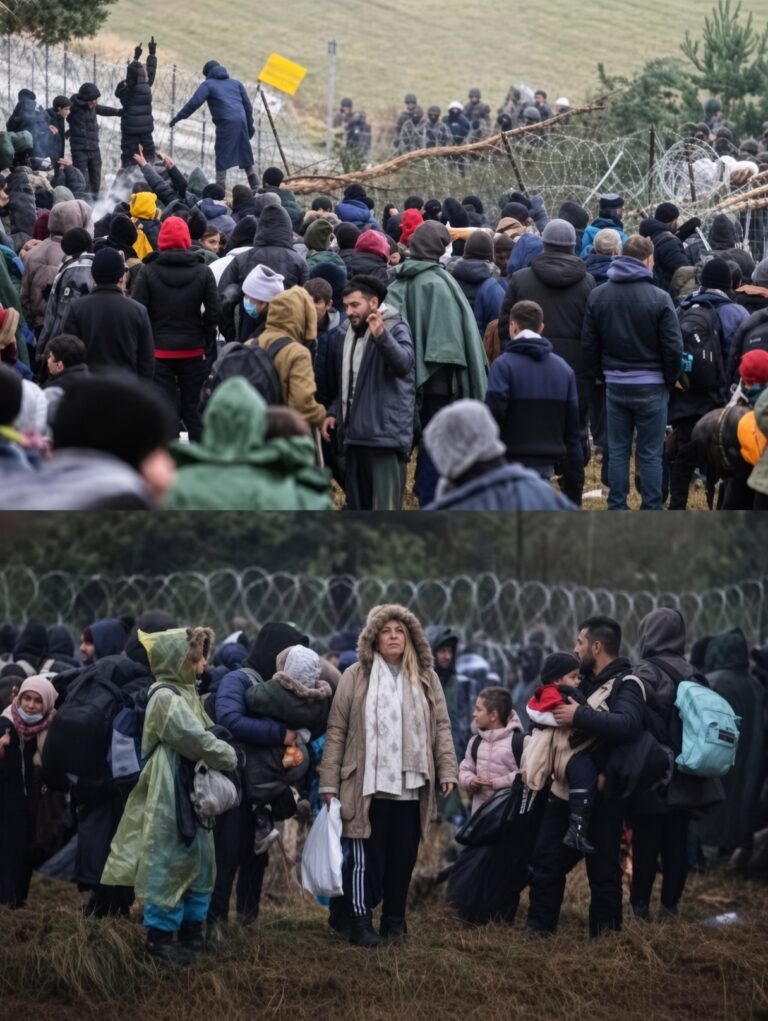
Critics, however, question whether increased military involvement would address the underlying drivers of migration. They argue that many migrants attempting the crossing are fleeing conflict, persecution, political instability, or severe economic hardship. Humanitarian organizations maintain that focusing primarily on enforcement without expanding legal migration pathways or improving international refugee processing may simply redirect migration routes rather than eliminate dangerous journeys altogether.
International refugee law further complicates the discussion. Individuals who reach another country’s jurisdiction may seek asylum regardless of how they entered that country. Governments nevertheless retain authority to regulate immigration, protect borders, and determine asylum claims through established legal procedures. The challenge for policymakers lies in balancing border security with humanitarian responsibilities, an issue that has generated considerable legal debate across Europe.
Military analysts have also noted practical considerations associated with any expanded deployment. Operating naval vessels, surveillance aircraft, helicopters, and specialized personnel across the Channel would require substantial financial resources, logistical planning, interagency coordination, and sustained political support. Questions would likely arise regarding command structures, operational objectives, accountability mechanisms, and the division of responsibilities between military forces and civilian border agencies.
The proposal has also fueled broader political debate about national sovereignty. Supporters frequently argue that every sovereign state possesses both the right and the responsibility to control its borders effectively. They contend that maintaining public confidence in immigration systems depends upon demonstrating that governments can enforce immigration laws consistently. Critics generally agree that border security is important but caution that enforcement policies should remain proportionate, legally compliant, and consistent with international obligations.
Beyond domestic politics, developments in the English Channel are being closely watched throughout Europe. Several European countries have introduced increasingly restrictive migration measures over recent years, reflecting growing public concern about irregular migration and pressure on asylum systems. Consequently, proposals emerging in Britain often contribute to wider European conversations about border management, international cooperation, refugee protection, and the future direction of immigration policy.
Public opinion remains divided. Polling conducted over recent years has consistently shown that many voters support stronger action to reduce illegal Channel crossings. At the same time, surveys also indicate continued public support for offering protection to genuine refugees fleeing war or persecution through orderly legal processes. These dual priorities— firm border control and humanitarian responsibility-illustrate the complexity of designing immigration policies capable of satisfying diverse public expectations.
Media coverage of migration frequently illustrates how emotionally charged the issue has become. Dramatic headlines, viral social media posts, edited video clips, and political campaign messaging often generate widespread online discussion before detailed policy documents become available. Consequently, analysts increasingly encourage readers to examine official statements, legislative proposals, and verified reporting before drawing conclusions about claims circulating online.
Whether Reform UK’s proposal ultimately influences future government policy remains uncertain. Political parties frequently introduce ambitious policy platforms during periods of heightened public debate, some of which later evolve through parliamentary scrutiny, legal review, and consultation with experts. Should similar proposals advance beyond campaign discussions into formal government consideration, they would almost certainly undergo extensive examination by Parliament, legal advisers, military planners, and international partners.
The continuing debate surrounding Channel crossings ultimately reflects broader questions facing not only the United Kingdom but many democratic societies. Governments must determine how to protect national borders, combat organized criminal smuggling networks, fulfill humanitarian obligations, cooperate with neighboring countries, maintain public confidence, and uphold the rule of law simultaneously. These objectives can at times reinforce one another, yet they may also come into tension, requiring difficult political choices.
As migration pressures continue to evolve, discussions over border security are likely to remain prominent in British politics. Reform UK’s proposal for expanded military involvement represents one contribution to that ongoing national conversation. Whether one views the proposal as a necessary strengthening of border enforcement or as an approach requiring careful legal and humanitarian scrutiny, the debate illustrates the enduring challenge of balancing security, international cooperation, national sovereignty, and the protection of human life within an increasingly interconnected world.